
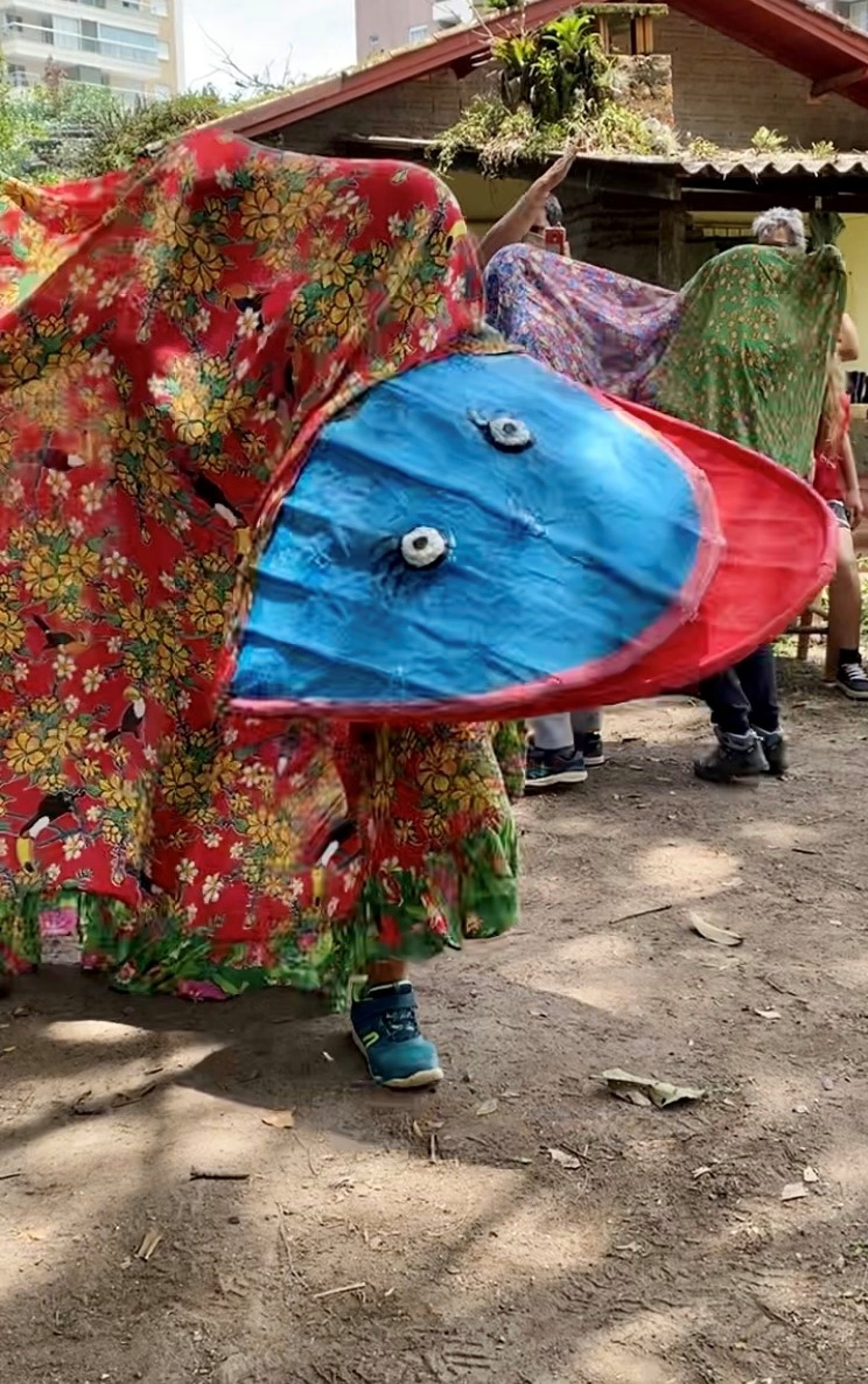
On a festival afternoon in Florianópolis, a cloth ox dances, drops dead in the middle of the ring, and comes back to life while the crowd sings. Alongside it pass a long-armed puppet, a goat that butts anyone who comes too close, and a creature that pretends to swallow the children. This is the boi de mamão, one of the liveliest folk pageants in the island’s Luso-Azorean tradition (Portuguese, by way of the Azores).
The boi de mamão is a small piece of street theater: it brings together music, staging, and improvisation in a single storyline. It emerged on the coast of Santa Catarina in the 19th century and, over time, became part of the city’s identity. In 2019, it was recognized as Intangible Cultural Heritage of Florianópolis.
This guide explains what the boi de mamão is, where it came from, who its characters are, and how you can catch a performance on the island. It is also a way into understanding the culture that took shape in the old parishes (freguesias) of Florianópolis.
What the boi de mamão is
The boi de mamão is a folk play (auto) of Luso-Azorean origin. “Auto” here carries the old sense of a staged piece: there is a plot, a fixed cast of characters, and a sequence of scenes that repeat at every performance.
The thread of the story is simple. A beloved ox dies in the middle of the festivities. The cowherd despairs and calls for help to bring it back. A doctor and a benzedeira (a folk healer) come onstage, and the ox is revived, to everyone’s delight. A number of other animals and figures circle around this core.
What holds the performance together is the music. Each character’s entrance has its own toada (a folk melody), sung by the group to the sound of instruments such as the pandeiro (a tambourine) and the viola (a Brazilian folk guitar). The audience follows along, responds, and often takes part. It is both a game and a show at once.
The oldest records of the pageant in Santa Catarina date back to around 1840, in the Itajaí Valley and Greater Florianópolis. The tradition arrived with the Azorean settlers who populated the coast of Santa Catarina from the 18th century onward, and it took on features of its own in each community.
From “boi de pano” to “boi de mamão”: where the name comes from
The ox that gives the tradition its name is a light frame, covered in cloth, that a performer wears and moves from inside. Because of this, the pageant was once called boi de pano (“cloth ox”), and before that it was linked to the bumba meu boi of northeastern Brazil.
The current name appeared around the 1930s. The most often repeated version tells that, rushing to build the ox’s head for a performance, one group used a green papaya (mamão) in place of the traditional structure. The improvisation caught on, and the name “boi de mamão” (roughly, “papaya ox”) stuck.
It is worth noting that this is the origin as the tradition itself tells it. As with much of folklore, there is no single document that confirms the scene. What exists is the memory passed down by the groups, and that memory is part of the heritage itself.
The boi de mamão is also related to Iberian pageants. Researchers connect some of its figures to traditions from northern Portugal and Galicia, where similar festival monsters parade through the streets. The version danced in Florianópolis, however, is a creation already adapted to the coast of Santa Catarina.
The characters of the boi de mamão
The cast varies from group to group, but some figures are almost always present. Each has its own entrance, toada, and behavior.
- The ox. The central character. It dies at the height of the celebration and is reborn at the end, in a cycle that repeats at every performance.
- Mateus, the cowherd. The ox’s owner. He is the one who despairs at the animal’s death and sets off in search of help.
- The doctor and the benzedeira. Called in to cure the ox. Side by side, they stand for formal medicine and folk healing, without one canceling out the other.
- The goat and the little horse. Animals that enter the ring, chase after the audience, and set the comic tone of the play.
- The vulture. It appears circling the fallen ox, as if waiting for the outcome.
- The Maricota. A giant puppet with long, loose arms that spins and swings them above the audience.
- The Bernúncia. A creature with an enormous mouth that pretends to swallow the children. Legend says it devours disobedient little ones, who then go on to live inside it.
The Bernúncia deserves a note of its own. It is a stylized dragon and a creation from Santa Catarina, with no exact equivalent in other Brazilian pageants. The fright it gives the children is staged and agreed upon among the performers: it scares and delights in the same scene, and no one gets hurt.
Why the boi de mamão is heritage in Florianópolis
In 2019, on Folklore Day, the boi de mamão was declared Intangible Cultural Heritage of Florianópolis. The recognition protects a living practice: the right of the tradition to keep being played, taught, and performed.
On the day of the declaration, eleven groups gathered at Praça XV de Novembro, in the city center, for a joint performance. The number gives a sense of how much life the tradition still has in the city.
Florianópolis is home to the largest number of boi de mamão groups on the Santa Catarina coast. They usually take the name of their home community, such as the groups from Pantanal, Vargem Grande, and Sambaqui, among many others spread across the island’s old parishes.
This rootedness in the neighborhoods explains why the boi de mamão endures. It does not depend on a big stage. It is born and kept alive within the communities, passed from performer to performer, from one generation to the next.
Where to see the boi de mamão in Florianópolis
There is no fixed season. Performances cluster around dates with a strong Azorean identity and around community celebrations throughout the year.
The likeliest times to come across the boi de mamão are the festivals of the Divino Espírito Santo (the Holy Spirit), the patron-saint festivals of the parishes, Folklore Day in August, and the year-end programs in the neighborhoods of the island’s interior. Schools and cultural centers often host groups as well.
Because the dates change each year, the advice is to follow the city’s cultural calendar before making plans. We have gathered the main sources in our guide to the Florianópolis cultural calendar and in our picks for what to do in Florianópolis this week.
Frequently asked questions
What is the boi de mamão?
It is a Luso-Azorean folk play from the coast of Santa Catarina, Brazil, that brings together theater, dance, and music. The plot centers on an ox that dies and is brought back to life, surrounded by characters such as Mateus the cowherd, the Maricota, and the Bernúncia. In Florianópolis, it has been Intangible Cultural Heritage since 2019.
Why is it called boi de mamão?
The name appeared around the 1930s. According to tradition, a group used a green papaya (mamão) to build the ox’s head in a hurry, and the nickname stuck. Before that, the pageant was known as boi de pano (“cloth ox”).
Who is the Bernúncia in the boi de mamão?
The Bernúncia is one of the most striking characters of the play: a creature with an enormous mouth that pretends to swallow the children. It is a stylized dragon and a creation from Santa Catarina, with no identical equivalent in other Brazilian pageants. The fright is staged, agreed upon among the performers.
What are the origins of the boi de mamão in Santa Catarina?
The oldest records date back to around 1840, in the Itajaí Valley and Greater Florianópolis. The tradition arrived with the Azorean settlement of the Santa Catarina coast and was adapted in each community, gaining characters and toadas of its own.
Where can I see a boi de mamão performance in Florianópolis?
Performances cluster around the Divino festivals, the parishes’ patron-saint festivals, Folklore Day in August, and year-end community celebrations. Since there is no fixed calendar, the best approach is to check the city’s cultural agenda before planning your visit.
Getting to know the island from within
The boi de mamão is a good reminder that Florianópolis is more than its beaches. Beneath the tourist itinerary lies an island of old parishes, community festivals, and an Azorean culture that is still alive in the neighborhoods.
At Regente, reading the territory this way is part of the work. Understanding where a city keeps its history also helps us understand how it is organized and how it welcomes those who arrive. If you would like to get to know Florianópolis from within, with curation and without rushing, talk to our team.
See also: the history of Florianópolis