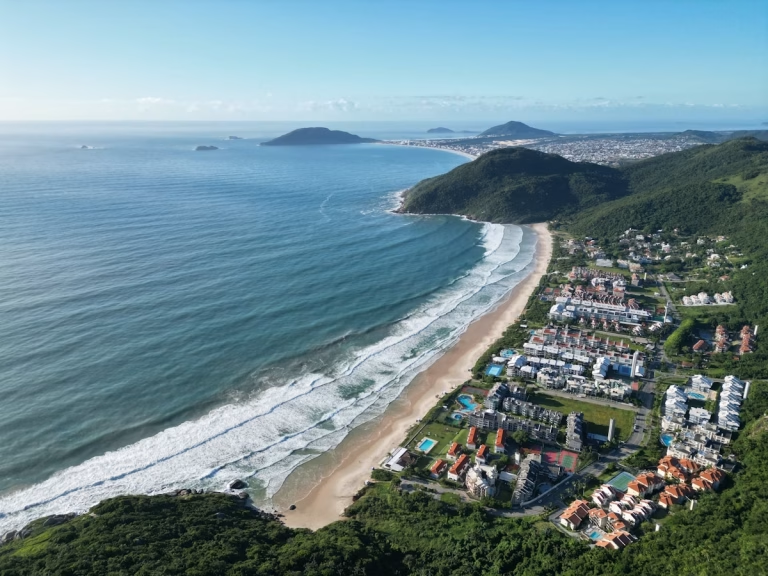
Florianopolis faces the Atlantic. That shapes almost everything about the city, including where you will want to be in the late afternoon. The most famous beaches, the open-ocean ones, sit on the east side. That is where the sun rises. To watch it set, you have to cross the Island.
On the west side, facing the Baia Norte (North Bay) and the mainland mountains, the water is calm and the horizon is clear. This is where the Azorean settlers put down roots in the 18th century, and it is where the city’s most celebrated sunsets happen. This guide gathers five places to watch the sun go down, with what each one offers and what you should know before you go.
It is an itinerary from people who know the Island from the inside, not a list of generic superlatives.
Why the Island’s west side holds the best sunsets
The reason is geographic, and it is simple. The east side of the Island, home to Joaquina, Campeche and Praia Mole, faces the open ocean head-on. It is the side of sunrises and surf. Late in the day, the sun disappears behind the hills at the back of anyone standing on the beach.
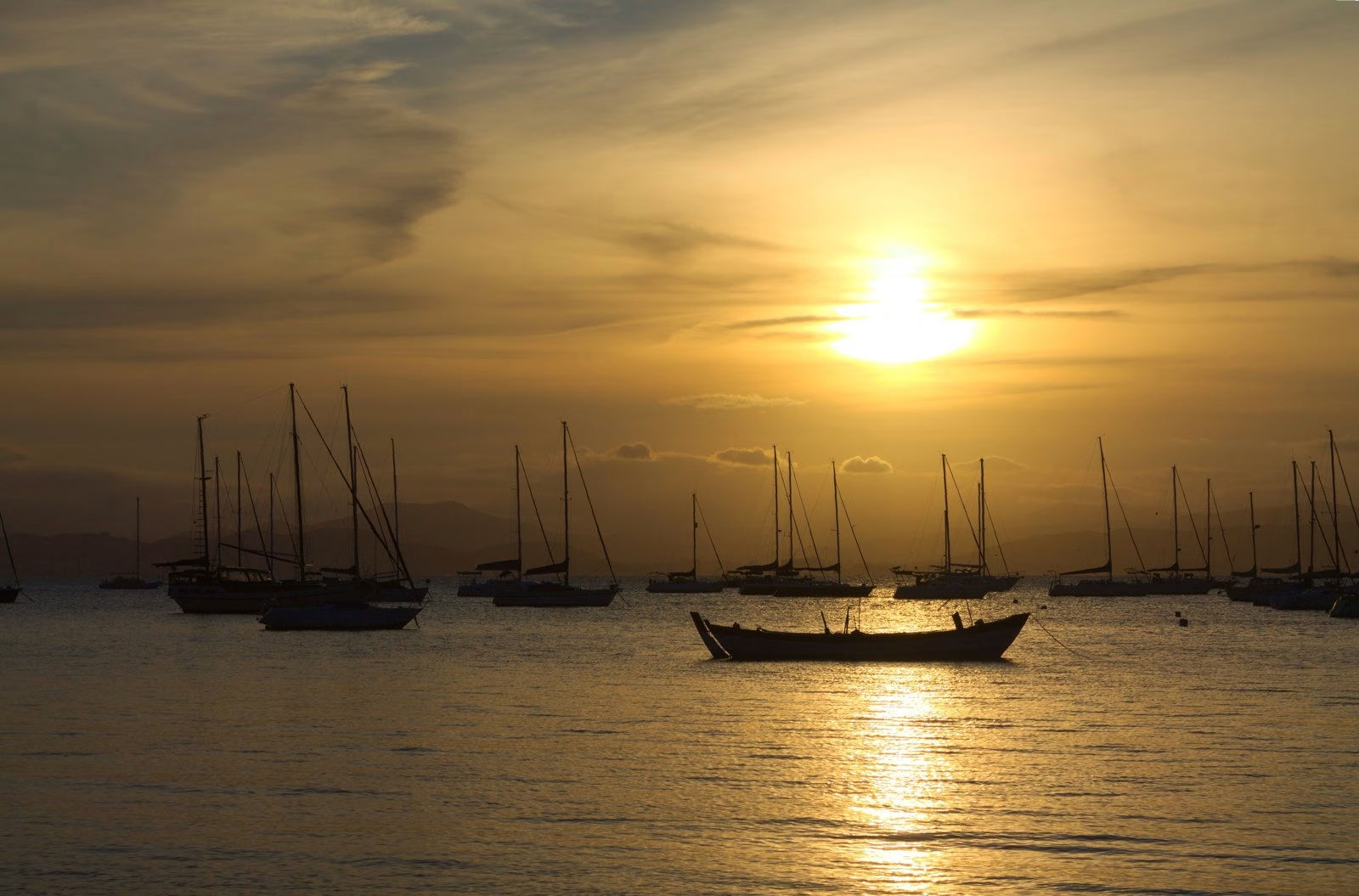
The west is the opposite. The coast facing the North Bay looks toward the mainland, across a sheltered band of water. With no strong waves, the sea turns mirror-flat, and the sun sets over the mountains of Palhoca and Sao Jose (mainland towns across the bay). It is that meeting of still water, hillside silhouette and open sky that creates the effect.
It is no accident that the stretch linking Santo Antonio de Lisboa, Sambaqui and Cacupe is called the Rota Gastronomica do Sol Poente (the Setting-Sun Food Trail). The name is no recent invention. It describes what the landscape has always done there.
One honest caveat. Not all five places on this list sit exactly to the west. Two of them are on the northern tip, where the coast curves enough to still catch the sun dropping over the water. And one sits at the Island’s geographic center, up high, looking toward the mainland. The west-side rule explains most of the good sunsets in Florianopolis, but the Island keeps exceptions worth the detour.
Santo Antonio de Lisboa and Ponta do Sambaqui
If there is one classic sunset setting in Florianopolis, this is it. Santo Antonio de Lisboa is the oldest Azorean settlement on the Island. The first colonists arrived from the Azores in 1748, and the parish was established in 1750. The white houses with their colorful doors, the church on the rise and the cobbled streets all come from that heritage.
The waterfront is short and flat, good for walking. The restaurants serve oysters year-round, and the area is one of Brazil’s largest producers. In the late afternoon, activity gathers around the pier and the benches facing the bay. The sun drops behind the mainland, and the water reflects everything.
Next door, the Sambaqui neighborhood is the quieter version of the same landscape. The name comes from the shell mounds built by pre-colonial fishing peoples thousands of years ago (a sambaqui is a shell midden). For a long time these mounds were described as heaps of refuse. Modern archaeology understands them as monuments, many holding human burials. Florianopolis has more than 80 sites of this kind, and the neighborhood is named for them.
For the sunset, head to the Mirante da Ponta do Sambaqui (Sambaqui Point overlook), inside Parque Anibal da Rocha Nunes Pires, or the stretch of waterfront near the marina. From there you can see nearby islands and the mainland lights beginning to come on across the water.
Getting there: it sits in the north of the Island, about 20 minutes from downtown by car outside rush hour. Parking is limited on weekends.
Costa da Lagoa: the sunset you catch on the boat back
Costa da Lagoa is unlike anything else on this list. It is a fishing village on the shore of Lagoa da Conceicao (a large coastal lagoon), with no road access. You get there by boat or on foot.
The boat leaves from the public pier at Praca Bento Silverio, in the center of the Lagoa district. The crossing takes about 30 minutes. The trail, called the Caminho da Costa da Lagoa, starts at Canto dos Aracas and runs about 7 kilometers (4.3 miles) through the Mata Atlantica (Brazil’s Atlantic Forest), with shade, streams and gentle climbs.
The most common plan is to go in the morning or early afternoon, have a fresh-fish lunch at one of the waterside restaurants, and take the boat back at the end of the day. It is on the way back, with the lagoon open in front of you, that the sunset appears. The effect here differs from the bay’s flat horizon: it is low light over the still water of the lagoon, between the hills.
One practical note: check the time of the last boat before planning your return around the sunset. After dark, the only way out is the trail.
Morro da Cruz: the sunset seen from above
The Morro da Cruz overlook stands at 285 meters (935 feet), on the ridge that cuts through the center of the Island. The title of highest point in Greater Florianopolis belongs to Morro do Cambirela, in Palhoca, at more than a thousand meters; Morro da Cruz does not reach that, but it is among the highest with easy access, and the view rewards the climb.
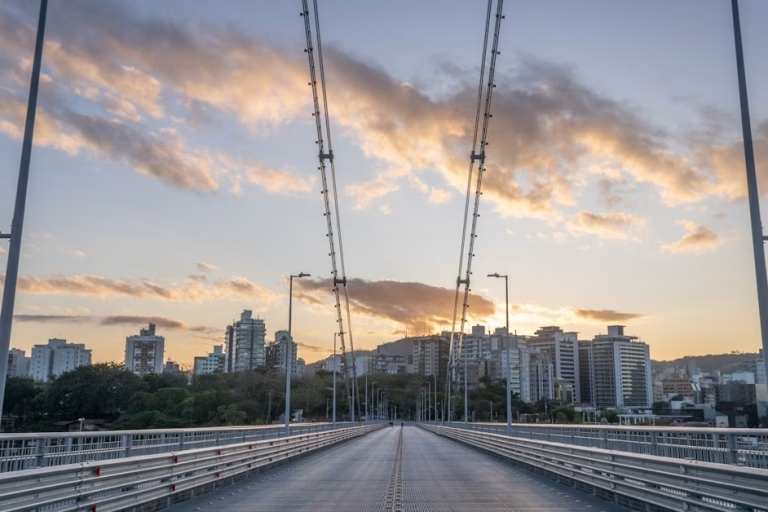
From there the view runs a full 360 degrees: the North Bay, the South Bay, downtown, the Hercilio Luz Bridge and the mainland mountains beyond. It is the best-known panoramic view in the city.
The sunset here has a character of its own, and it is worth knowing before you go up. The sun does not sink into the sea. It sets behind the mainland mountains, on the Palhoca and Sao Jose side. For anyone expecting the disc to slip into the ocean, it may come as a surprise. For anyone who likes a mountain ridge cut sharp against an orange sky, it is one of the best.
The overlook is part of the Parque Natural Municipal do Morro da Cruz, a municipal nature park with marked trails and free entry. You can arrive by car, by ride-hailing app or by public transport to the base. As with any high, isolated urban area, it is worth going with care and, ideally, not alone at nightfall.
Praia do Forte and the Sao Jose da Ponta Grossa Fortress
At the far north of the Island, between Jurere and Praia da Daniela, Praia do Forte is a low-key strip of pale sand and calm water. It is less busy than its neighbors, with a few kiosks and simple seafood at the water’s edge. Good for an unhurried late afternoon.
What raises the place to another level is its neighbor: the Fortaleza de Sao Jose da Ponta Grossa, a fort built by the Portuguese in the mid-18th century to defend the northern channel. Restored, it is today one of the best-preserved historic monuments in Florianopolis.
If you can schedule your visit for the late afternoon, climb up to the ramparts. The sun going down over the water, seen from the top of a nearly 300-year-old fort, is a hard combination to beat. Check the opening hours first, because the fort closes early in the evening and does not stay open for the summer sunset.
Ponta das Canas: the calm-sea sunset in the north
Ponta das Canas sits on the northern tip of the Island, where the coast curves enough to catch the sun dropping over the water. It is a beach of fine, pale sand, shallow water and no strong waves, which makes it popular with families with young children.
That calm sea is what makes the sunset work. The nearly still water turns into a low mirror at the end of the day. It is a beach sunset, more open than the bay’s and easier to reach than Costa da Lagoa’s.
Because it is far from downtown, about 35 kilometers (22 miles), it makes more sense as a full-day destination in the north of the Island than as a quick late-afternoon escape.
How to plan your sunset
A few practical points that apply to any of the five spots.
Timing. Florianopolis no longer observes daylight saving time. The sun sets around 5 p.m. at the height of winter and close to 7 p.m. at the height of summer (in the Southern Hemisphere, winter runs roughly June to September). Check the exact time for the day before you head out, and arrive 30 to 40 minutes early, because the best light comes before the sun touches the horizon.
Sky. A completely clear day gives a pretty sunset, but it is a sky with a few clouds that tends to produce the strongest colors. A southerly wind after a cold front usually clears the air and improves the view toward the mainland.
Traffic. The north of the Island jams up on summer late afternoons and on weekends. For Santo Antonio, Sambaqui and Ponta das Canas, leave early.
Frequently asked questions
What is the best place to watch the sunset in Florianopolis?
There is no single answer, because it depends on what you are after. For the classic setting with good food, Santo Antonio de Lisboa and Ponta do Sambaqui, on the Setting-Sun Food Trail. For a panoramic view from above, Morro da Cruz. For a more secluded experience, Costa da Lagoa. What the best spots share is a face turned toward the North Bay or the mainland, on the west and north of the Island.
Where is the Rota Gastronomica do Sol Poente?
It is the stretch of the Island’s northwest coast that links the neighborhoods of Santo Antonio de Lisboa, Sambaqui and Cacupe, all facing the North Bay. The name (the Setting-Sun Food Trail) comes from the pairing of seafood restaurants, oysters above all, with the sunset over the calm water of the bay.
What time does the sun set in Florianopolis?
Since the city no longer uses daylight saving time, sunset ranges from about 5 p.m. in winter to close to 7 p.m. in summer (in the Southern Hemisphere, winter runs roughly June to September). Check the exact time for the day of your visit and arrive early, because the finest light appears in the minutes before the sun goes down.
Can you watch the sun set over the sea in Florianopolis?
Partly. At the North Bay spots, like Santo Antonio de Lisboa and Sambaqui, the sun goes down over the bay water and behind the mainland mountains, not over the open ocean. On the northern-tip beaches, like Ponta das Canas, the sun sets closer to the waterline. The open ocean, on the east of the Island, is the side of the sunrise, not the sunset.
Do you have to pay to go up Morro da Cruz?
No. The Morro da Cruz overlook is part of the Parque Natural Municipal do Morro da Cruz and entry is free. You can arrive by car, ride-hailing app or public transport to the base. Because it is a high, isolated area, it is best to go with company and to stay alert at nightfall.
Getting to know the Island from the inside
The sunset is a good way into understanding Florianopolis. In one simple gesture it shows the Island’s logic: the east of ocean and waves, the west of bay and calm, the north of pale sand, and the ridge in the middle of it all. Anyone choosing where to live here ends up, sooner or later, choosing which side of the light they want to be on.
At Regente, this kind of reading of the territory is part of the work. To know a neighborhood is to know its orientation, its rhythm and what it offers in the late afternoon, not just the price per square meter. If you are thinking about living or investing in Florianopolis and want to understand the Island from the inside, talk to our curators or start with the guides to Santo Antonio de Lisboa and to living in Florianopolis.
Read also: the history of Florianopolis