Before the city was called Florianópolis, it was Nossa Senhora do Desterro (the town’s colonial name). It was there, in a townhouse in the old center, that a boy was born in 1832 who would become the first great name in Brazilian academic painting. The canvas he painted at 28, “The First Mass in Brazil” (“A Primeira Missa no Brasil”), found its way into the school books of entire generations.
What almost no one remembers is that the house where it all began is still standing. It is one of the few intact colonial townhouses left downtown, now turned into a public museum.
This guide covers who Victor Meirelles was, what he painted, and why the house where he was born remains one of the most understated yet history-laden addresses in downtown Florianópolis. It is a way into the Island (Florianópolis sits on an island off Brazil’s southern coast) beyond the beach itinerary.
Who Victor Meirelles Was
Victor Meirelles de Lima was born in Nossa Senhora do Desterro on August 18, 1832. He came from a modest family. His talent showed early and, at fifteen, he left the Island for Rio de Janeiro to study at the Imperial Academy of Fine Arts.
At the Academy he specialized in history painting, the most prestigious genre of the era. He won the Foreign Travel Prize and spent about seven years honing his craft in Europe, between Rome and Paris.
Back in Brazil, he became one of the trusted artists of Emperor Dom Pedro II and taught for decades at the same Academy that had trained him. He died in Rio de Janeiro on February 22, 1903. The small Desterro he had left at fifteen was already called Florianópolis by the time he died.
The Two Works That Sealed His Name
Meirelles is remembered above all for two large-format canvases.
“The First Mass in Brazil” (“A Primeira Missa no Brasil”) was painted in Paris and finished in 1860. Art historians tend to treat it as the first major work of Brazilian painting. Shown at the official Paris Salon in 1861, it was also the first Brazilian canvas to appear in a significant international exhibition.
One honest note is worth making: the painting depicts the 1500 mass as the nineteenth century imagined it, not as a record of what actually happened. It is a period construction, part of an effort to create visual symbols for Brazil’s history. That does not diminish the work; it helps you read it for what it is.
The second canvas is “The Battle of Guararapes” (“Batalha dos Guararapes”), produced between 1875 and 1879. It depicts the seventeenth-century clash in Pernambuco (a state in northeastern Brazil) between local and Dutch forces. It is one of the largest history paintings ever made in the country.
The House That Became a Museum
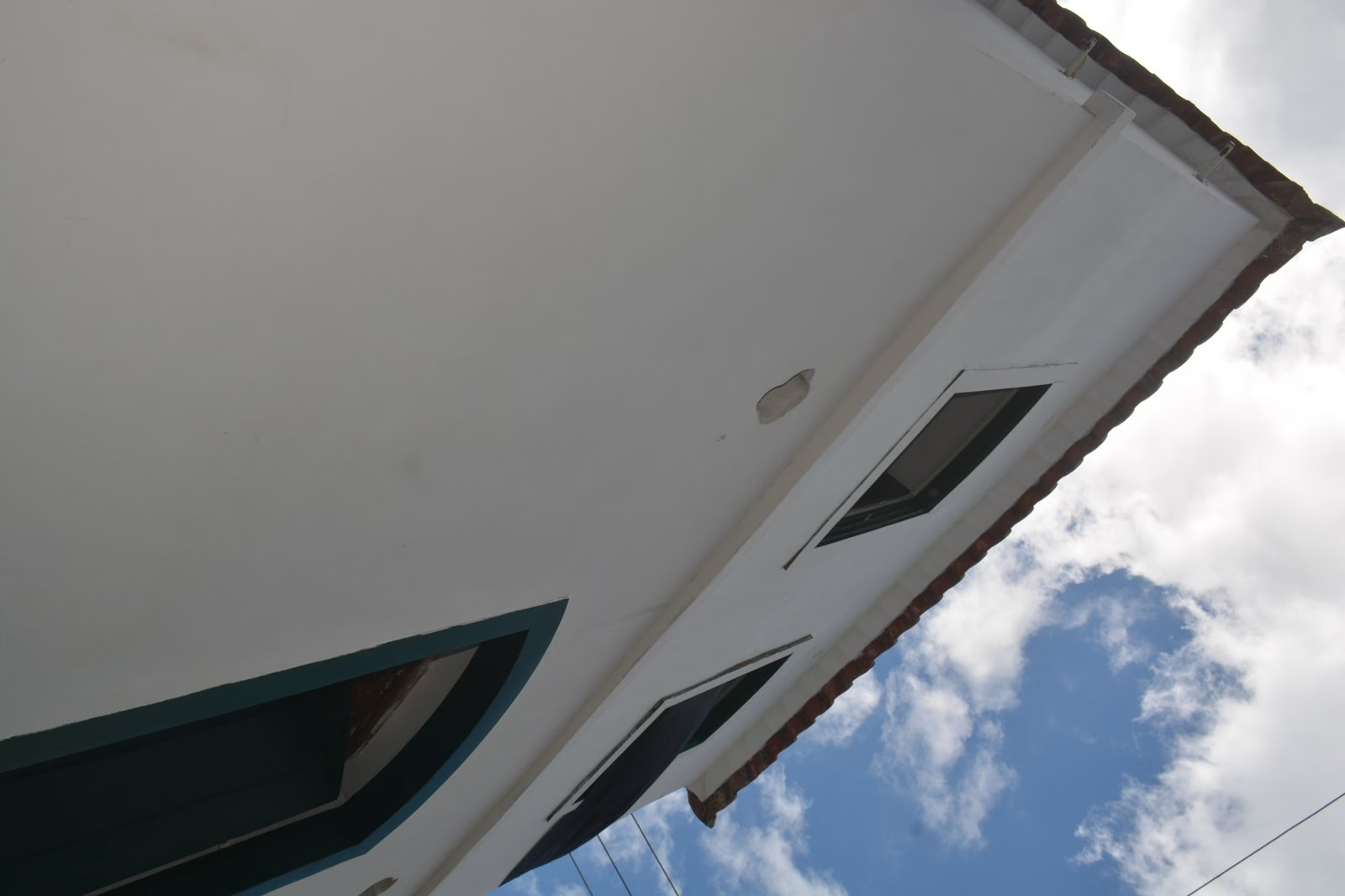
The townhouse on Rua Victor Meirelles was built in 1832, the same year the painter was born there. The architecture is the Luso-Brazilian style typical of the colonial period: a narrow façade, high ceilings, and walls shared with the buildings next door.
This kind of house was once the norm in the center of Desterro. Today it is the exception. Densification and demolition through the twentieth century swept away most of the old houses, which makes the Meirelles townhouse one of the few intact colonial examples left in the heart of the city.
In 1950 the property was listed as national historic heritage by IPHAN (Brazil’s federal heritage institute). Two years later, in 1952, it was converted into a museum. The Victor Meirelles Museum has undergone restoration and expansion work in recent years, including accessibility improvements.
Why This Matters When You Look at Downtown Today
There is an easy read of Florianópolis that reduces it to beaches and the eastern coast. Downtown barely figures in it, and mostly as a place you pass through.
The Victor Meirelles house is an argument against that simplification. It reveals a downtown with almost two centuries of layers: an address where an artist of national standing was born, in a townhouse that survived the shift from Desterro to Florianópolis without being torn down.
For anyone thinking about living or investing in the area, this kind of heritage weighs on the decision. A downtown with active museums, protected historic houses, and preserved memory has identity, and identity sustains demand over time. The same reasoning applies to the Hercílio Luz Bridge and to the hundred-year history of downtown itself.
How to Fit the Visit into a Weekend on the Island
The museum sits on Rua Victor Meirelles, downtown, a few minutes on foot from other historic landmarks such as the Metropolitan Cathedral, Praça XV (the main square), and the Mercado Público (the public market).
It is a short stop on foot, easy to combine with a historic-center walking tour in a morning. Before you go, check the opening hours and admission details on the museum’s official page, since public institutions adjust their schedule over the year.
For what is happening in the city during the week of your visit, the Florianópolis cultural calendar helps you round out the rest of the itinerary.
Frequently Asked Questions
Who was Victor Meirelles?
He was a Brazilian painter born in Nossa Senhora do Desterro, today Florianópolis, in 1832. He specialized in history painting at the Imperial Academy of Fine Arts, studied for years in Europe, and is regarded as the country’s first great academic painter. He died in Rio de Janeiro in 1903.
What is Victor Meirelles’s best-known work?
“The First Mass in Brazil” (“A Primeira Missa no Brasil”), completed in 1860, is his most recognized canvas and is often treated as the first major work of Brazilian painting. His other celebrated canvas is “The Battle of Guararapes” (“Batalha dos Guararapes”), painted between 1875 and 1879.
Where is the Victor Meirelles Museum?
The museum is on Rua Victor Meirelles, in downtown Florianópolis, in the very colonial townhouse from 1832 where the painter was born. It is a few minutes on foot from the Cathedral, Praça XV, and the Mercado Público.
Can you visit the Victor Meirelles Museum?
Yes. The house has been a public museum since 1952 and is open to visitors. Since hours and admission details change over the year, the safest bet is to confirm on the museum’s official page before you go.
Why is the Victor Meirelles house important to downtown Florianópolis?
Beyond being the painter’s birthplace, the townhouse is one of the few intact colonial examples left downtown. It was listed by IPHAN (Brazil’s federal heritage institute) in 1950, which makes it one of the few physical records left of colonial Desterro, in a center that has lost much of its old housing stock.
Getting to Know the Island from Within
The most common image of Florianópolis is still the beaches. Downtown rarely enters that picture, yet it holds almost two centuries of history. The same townhouse where Victor Meirelles was born withstood the densification that pulled down much of the city’s colonial housing.
At Regente, that is the lens guiding our curation: an address has to make sense within the city around it, not just in the square meters of the property. If you want to get to know Florianópolis in layers before deciding where to live or invest, talk to our curators and start with the Island that does not fit on a postcard.
Read also: the history of Florianópolis