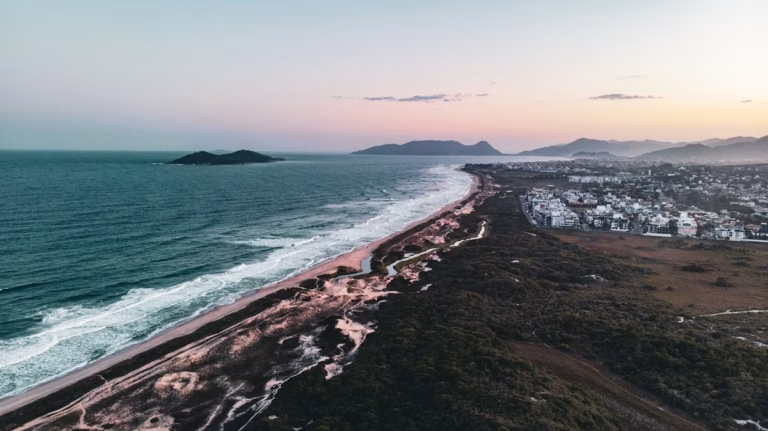
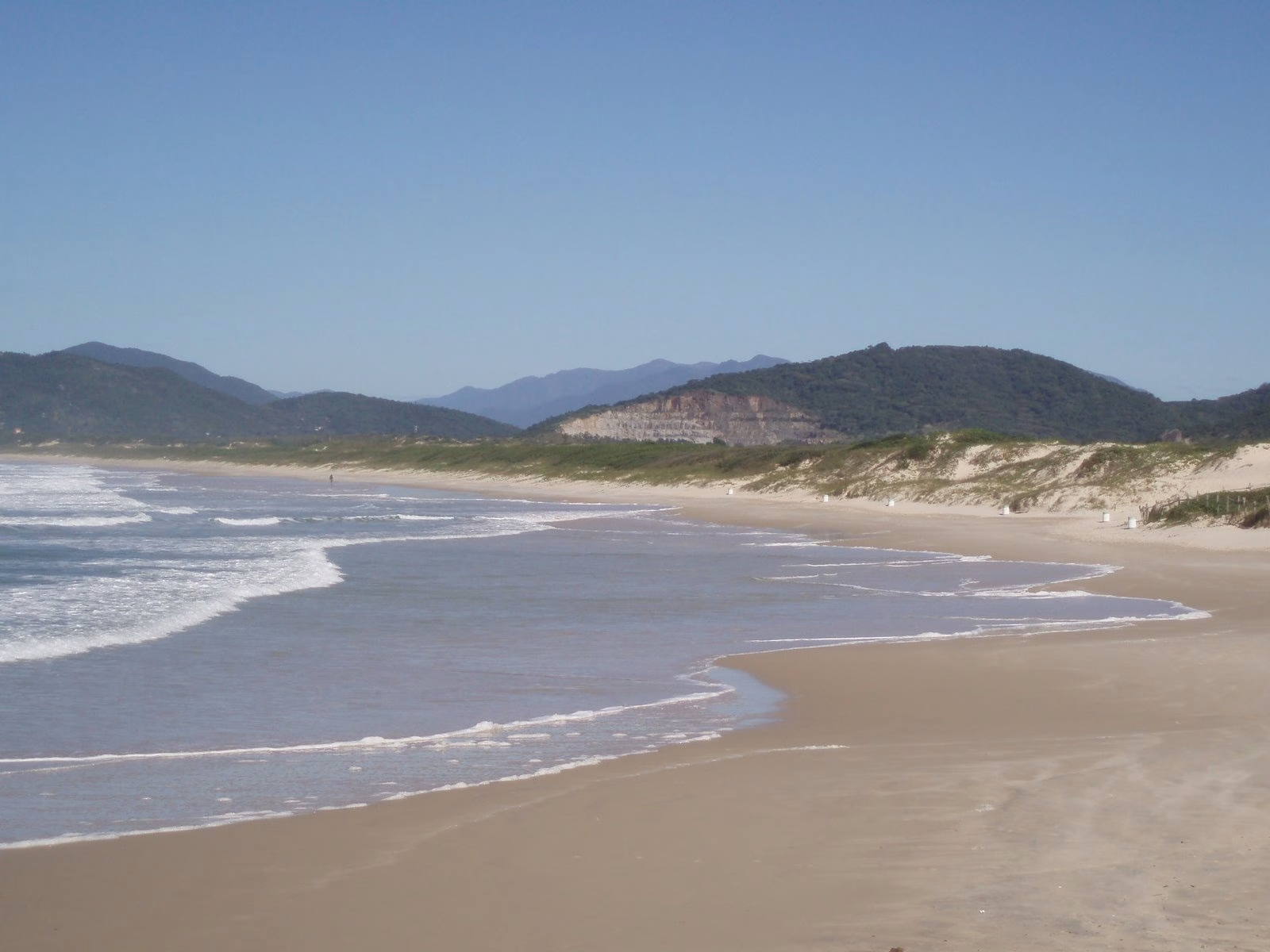
Florianopolis is an island with a coastline for every kind of person, and that is exactly where the confusion begins. People commonly speak of 42 beaches, but the number varies by source, and some lists exceed a hundred once they include coves and rocky headlands. Before choosing where to spend the summer, or where to live, it is worth understanding the geography behind the number: the Island brings together four distinct coastlines, each with a character of its own.
This guide organizes the beaches by region: North, East, South, and the western shoreline of the bay. For each one, the real profile of the water, the crowds, and the scenery, with the public sources that back up every detail. And at the end of each section, the angle that matters to anyone thinking about an address, not just a holiday: which beach suits which way of living.
The logic is simple. The beach that dazzles in January (high summer in the Southern Hemisphere) is not always the one that makes sense in July, when the tourists leave and what remains is everyday life. A coastline that is a party in summer can be deserted and without services off-season. Another that seems quiet holds the best infrastructure all year round. That difference is what separates a good vacation from a good decision about where to live.
How Florianopolis’s Beaches Are Divided
For the purposes of its beaches, Santa Catarina Island divides into four broad segments. The North combines calm seas, warmer water, and the highest concentration of bars, hotels, and shops. The East is the coast open to the ocean, with strong waves and more preserved scenery, surf country. The South keeps a rustic feel, with clear but colder water, native vegetation, and access points that are sometimes only reachable on foot. And the western shoreline, facing the bay, holds the villages of Azorean origin, with gentle water and sunsets over the mainland.
This geography is no accident. The eastern side takes the full force of the Atlantic swells, which explains the waves and the more open stretches of sand. The bay side, sheltered by the body of the Island itself and by the mainland, has still waters that served as a harbor in the colonial period. Understanding which side a beach is on tells you more about it than any photo.
North of the Island: Calm Seas, Warm Water, and Bustle
The North holds around fourteen beaches spread across eleven neighborhoods, according to the local outlet De Olho na Ilha. With the exception of Brava and Santinho, most have calm seas, warmer water, and a family profile. It is also the region with the most lodging, bars, and restaurants on the Island.
Jurerê. Split into two worlds. Jurerê Tradicional is residential and family-oriented, with a calm sea. Jurerê Internacional is the city’s high-end address, with beach clubs and a celebrity crowd that earned it the nickname of the beach of the famous.
Canasvieiras. A family beach, with calm blue water, but very busy. It is one of the hubs of Argentine tourism in summer, which fuels local commerce and vacation rentals.
Ingleses. The sea is usually calm, but the neighborhood is intense, with a strong retail scene and full infrastructure. It is one of the most densely built-up areas in the North, with a life of its own outside summer.
Daniela. Quiet and family-friendly, in a neighborhood of summer homes just beyond Jurerê, without its neighbor’s buzz. Very gentle water, good for small children.
Santinho. Home to the Costão do Santinho resort, it stands out for the rock inscriptions on its stones, traces of the Island’s first inhabitants. A trail over Morro das Aranhas leads to the neighboring Moçambique beach. There is surf.
Brava. It lives up to its name (brava means wild), with a rough sea and big waves. It is one of the most established surf breaks in Floripa (the local nickname for Florianopolis).
The Regente take on the North: this is the region of two opposite audiences sharing the same coastline. Jurerê Internacional draws those after a high-end second home and a resort lifestyle. Canasvieiras and Ingleses make sense for anyone thinking about rental income and unwilling to give up shops and services in winter. Daniela and Jurerê Tradicional serve the family that wants gentle water all year. To go deeper, see the guide to the neighborhoods most sought after by foreigners in Florianopolis, the one on buying property in Jurerê Internacional, and the one on property in Canasvieiras.
East of the Island: The Surf Coast
The East is the face the ocean strikes head-on. These are beaches of strong waves, open sand, and more preserved scenery, next to Lagoa da Conceição (a lagoon district known for its nightlife).
Joaquina. World-famous for surfing, with waves reaching three meters and championships throughout the year. Its dunes are a setting for sandboarding, with descents that can exceed 60 kilometers per hour.
Mole. About a kilometer of soft sand, which gave the beach its name (mole means soft). Strong, tubular waves draw surfers and international competitions. It is a haven for a young, mixed crowd.
Galheta. A near-deserted beach, surrounded by vegetation, rocks, and hills, with no facilities, reached by trail. It was the only beach reserved for nudism in Florianopolis until 2016, when the practice was banned there by law.
The Regente take on the East: this is the coastline for those who live the sea as a sport and a routine, not as an occasional postcard. Its proximity to Lagoa da Conceição, with dining and nightlife, makes the region a destination for a young crowd of surfers and remote workers. Anyone weighing this profile should read the honest guide to living in Florianopolis.
South of the Island: Rustic, Preserved, and Reached by Trail
The South has clearer but colder water and keeps a rustic feel. Here you find both developed beaches and stretches reachable only on foot or by boat.
Campeche. One of the Island’s largest beaches, with 3.5 kilometers of wide sand and strong surf. It began as a fishing village and became one of the most valued and sought-after residential neighborhoods, with a strong presence of tech workers. Offshore, Ilha do Campeche (Campeche Island) holds the largest concentration of rock inscriptions at a single archaeological site on the Brazilian coast, protected by IPHAN (Brazil’s national heritage institute) and open to visitors on a quota basis since 2025.
Armação. A former whaling village with a preserved historic character. It is one of the departure points for Ilha do Campeche.
Pântano do Sul. A fishing village with a calm sea, the starting point for trails to Lagoinha do Leste.
Lagoinha do Leste. One of the few beaches on the Island that keeps its original state, with no human intervention. Access is only by trail through the forest or by sea, which ensures its preservation.
Naufragados. At the far south of the Island, reached only by boat or by a roughly 50-minute trail of moderate difficulty. It is home to a historic lighthouse.
Solidão. Isolated and quiet, with generally rough water, for those seeking peace.
The Regente take on the South: this is the region of balance between the beach and real life. Campeche is today the address for those who want sea, nature, and fast-growing infrastructure, with a profile of families and tech professionals. Armação, Pântano do Sul, Lagoinha, Naufragados, and Solidão, on the other hand, belong to another category: they are places to visit and preserve, not to hunt for an apartment. Much of this stretch has no residential market at scale precisely because preservation is what defines it.
West of the Island: The Azorean Villages of the Bay
Facing the North Bay and the mainland, the western shoreline is the opposite of surf. Gentle water, a slow pace, and the oldest villages in Florianopolis, a legacy of the Azorean immigration that settled the Island between 1748 and 1756, when some five thousand people were moved from the Azores (a Portuguese archipelago in the Atlantic) to Santa Catarina.
Santo Antônio de Lisboa. One of the city’s oldest districts, about 16 kilometers from downtown. It preserves colorful Azorean-style houses, cobblestone streets, and the Nossa Senhora das Necessidades church, built in the mid-18th century. It is the city’s main oyster-farming hub, with waterfront restaurants and a sunset over the bay that is famous locally.
Sambaqui. A neighboring district, quieter still, with waterside bars and restaurants that keep the charm of the fishing communities. The name comes from the sambaquis, shell mounds left by fishing and gathering peoples who occupied the Island long before the Europeans arrived. They are protected archaeological sites.
The Regente take on the West: this is the coastline for those who want the charm of the village and the calm of the bay without giving up being close to downtown. Instead of waves and summer bustle, the shoreline offers dining, history, and still water. A profile that tends to appeal to anyone who values belonging and a slower pace when it comes to living.
Which Beach Suits Your Way of Living
Choosing a beach for the summer is one thing. Choosing a beach to live on is another, and the criteria change. In summer, beauty carries the weight. Over the whole year, what counts is services, commuting, density, and what remains when the tourists leave.
In short: the North serves both the high-end of Jurerê Internacional and the rental income of Canasvieiras and Ingleses. The East is surf country and a young crowd, right up against the Lagoon. Campeche, in the South, is today the meeting point between the beach and growing infrastructure. And the western shoreline delivers Azorean village life and calm close to downtown. The other beaches of the South, reached by trail, are for experiencing the Island, not for living on it.
To cross-reference this reading with neighborhoods, price, and daily routine, it is worth checking the guide to the best neighborhoods to live in Florianopolis, the curated list of neighborhoods for families with children, and the survey of the cost of living in Florianopolis.
Frequently Asked Questions
How many beaches does Florianopolis have?
There is no agreed-upon number. People commonly speak of 42 beaches, and that is the figure that has taken hold among residents and in tourism. Surveys that include coves and rocky headlands reach more than a hundred. In practice, what matters is understanding that these beaches are spread across four coastlines that differ sharply from one another: North, East, South, and the western shoreline of the bay.
Which is the best Florianopolis beach for families with children?
The beaches of the North tend to be the most recommended, thanks to the combination of calm seas, warmer water, and infrastructure of bars and shops. Daniela and Jurerê Tradicional have very gentle water, good for small children. Canasvieiras and Ingleses offer full facilities, with the trade-off of being quite busy in summer.
Which Florianopolis beaches have waves for surfing?
Surfing is concentrated in the East and at spots in the North and South. Joaquina and Mole, in the East, are the best-known breaks, with strong waves and international championships. Brava, in the North, has a rough sea and big waves. Campeche, in the South, also has strong surf along its 3.5-kilometer stretch.
Which is the most deserted and preserved beach in Florianopolis?
The most preserved beaches are in the South and can only be reached by trail or boat. Lagoinha do Leste is one of the few stretches of the Island with no human intervention, accessible only on foot through the forest or by sea. Naufragados, at the far south, requires about a 50-minute trail or a boat crossing. Solidão is isolated and quiet. Galheta, in the East, is also near-deserted and without facilities.
Which region of Florianopolis is best for living near the beach?
It depends on your lifestyle. For calm seas, shops, and rental income, the North. For surfing and nightlife right by the Lagoon, the East. For a balance between the beach and expanding infrastructure, Campeche, in the South. For the calm of an Azorean village close to downtown, the western shoreline, in Santo Antônio de Lisboa and Sambaqui.
Getting to Know the Island from the Inside
A beach map shows the geography. What it does not show is what changes between living facing the ocean in the East and living on the calm western bay, or between a neighborhood that boils over in summer and empties in winter and one that keeps its services all year. That fine reading, from those who live on the Island and do not just visit it, is the work of curation.
If you are thinking about living or investing in Florianopolis and want to understand which coastline suits your moment, Regente Imóveis can help translate this map into an address. Talk to our curation team and get to know the Island from the inside, region by region.
Read also: the history of Florianopolis