Before the Island had the name it has today, before bridges, neighborhoods and subdivisions, people were already building here. Not masonry houses or streets, but mounds of shells raised at the water’s edge over thousands of years. These are the sambaquis (ancient shell mounds), and Greater Florianópolis has more than 80 of them mapped, according to a survey by ND+.
For a long time these mounds were treated as leftovers: piles of refuse from communities that lived by gathering shellfish. Archaeology changed that reading. Today the sambaqui is understood as a monument: a funerary and territorial structure, built on purpose.
This guide explains what sambaquis are, where you can see them or learn about them in Florianópolis, and why anyone drawn to the Island gains from knowing this oldest layer of the place.
What a sambaqui is
A sambaqui is a mound formed mainly of shells, mixed with fish bones, the remains of hearths, tools and burials. The word comes from Tupi, an indigenous language: tamba, shell, and ki, mound. A mound of shells, literally.
They were built by populations that archaeologists call sambaquianos or sambaquieiros, over millennia, along the coast that is now Santa Catarina and much of the Brazilian seaboard. They were not passing groups. They were stable fishing communities that returned to the same spot for generations.
It is worth flagging a distinction that often causes confusion. These peoples predate the arrival of Europeans by thousands of years. This is not the 18th-century Azorean immigration that gave the Island part of the character it has today. These are distinct layers of history, separated by a vast gulf of time.
Why sambaquis are not “garbage dumps”
The idea of the sambaqui as a heap of refuse came from the earliest descriptions, back in the 19th century. It makes sense at first glance: a mound full of shells and bones looks like a lump of leftovers.
Contemporary archaeology dismantles that reading for several reasons. Inside the sambaquis there are burials, sometimes hundreds of them, arranged with care and accompanied by objects. There are signs that the mounds grew intentionally, layer upon layer, and stood visible in the landscape as reference points.
The National Museum of UFRJ (the Federal University of Rio de Janeiro) describes sambaquis as deliberate constructions, the result of an intentional process of deposition over time. The most widely accepted reading today is that of a funerary and territorial monument: a place where the dead were buried and where the group marked its presence in the landscape.
That does not mean everything is settled. There is academic debate about the exact function of each site, about diet, about the relationship between the mounds. What changed for good was the starting point: the sambaqui came to be read as a deliberate work.
The zooliths and what they reveal
Among the most remarkable finds from the sambaquis of southern Brazil are the zooliths (zoolithos): small stone sculptures in the shape of animals, above all birds and fish.
They are finely worked pieces, which again contradicts the image of a people concerned only with subsistence. Making a zoolith takes time, technique and aesthetic intent. Some appear associated with burials, which suggests symbolic or ritual value, though the precise meaning remains open.
In Florianópolis, the largest collection of this kind of material is gathered in a single place, which brings us to the next point.
Where to see sambaquis and learn about them in Florianópolis
Museu do Homem do Sambaqui
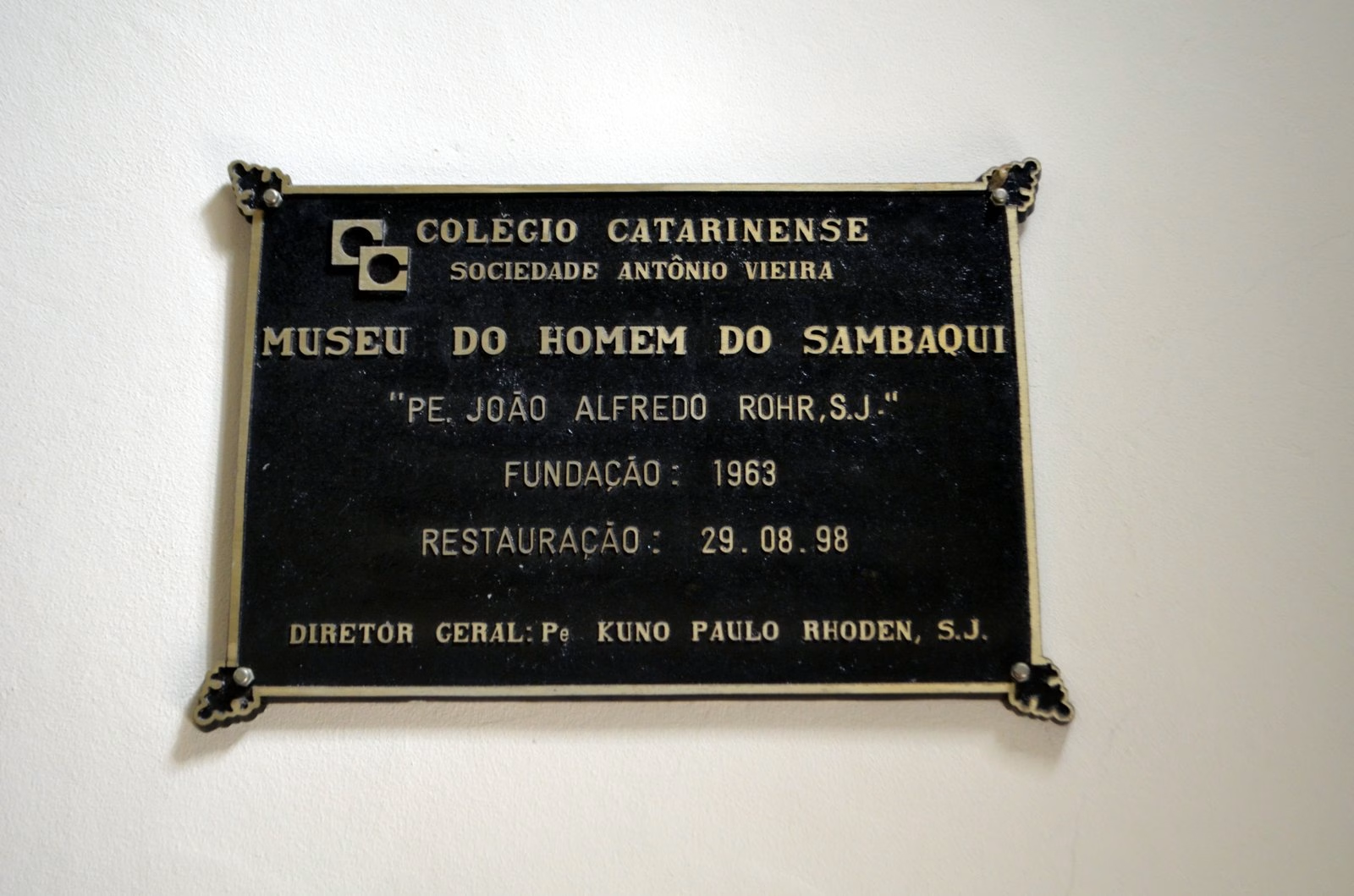
The central address for understanding the subject on the Island is the Museu do Homem do Sambaqui (Museum of the Sambaqui Man), inside the Colégio Catarinense, in the Centro (downtown) district. The collection grew out of the fieldwork of the Jesuit priest João Alfredo Rohr, who over his lifetime surveyed hundreds of archaeological sites in Santa Catarina.
The collection brings together thousands of objects recovered from the sambaquis, including zooliths and burials. It is the most direct starting point for anyone who wants to move past the abstract and see the material up close. Check opening hours and visiting conditions on the Colégio Catarinense page before you go, as this changes often.
The sites scattered across the Island
Most of the region’s 80-plus sambaquis are not open to ordinary visits. Many were buried, built over or lost to urbanization; others lie in protected or hard-to-reach areas. The Floripa Arqueológica portal maps and documents these sites, and it is a good way to grasp just how much of this history is literally beneath the city.
If your interest is in understanding the Island as a territory, it is worth reading the sambaquis alongside its other layers: the beaches, the trails, the rocky headlands. Guides such as what to do in Florianópolis and the city’s cultural calendar help you build an itinerary that goes beyond the shoreline.
The largest sambaqui in the world is in Santa Catarina
One fact anchors the state’s importance: the largest sambaqui in the world is not in Florianópolis, but it is close by, on the southern coast of Santa Catarina.
It is the Garopaba do Sul sambaqui, in Jaguaruna, roughly 30 meters (about 100 feet) tall, according to reporting by NSC Total and ND+. A mound on that scale does not rise by chance or all at once: it took centuries of continuous deposition.
That places the coast of Santa Catarina among the world’s centers of sambaqui culture. Florianópolis is not an isolated case, but part of a stretch of coastline densely marked by these monuments.
What is settled and what is still speculation
Very old sites attract bold interpretations. Associations circulate between sambaquis and astronomical alignments, or readings that liken them to megalithic monuments elsewhere in the world.
It is worth keeping things separate. That the sambaquis are intentional constructions, funerary and territorial, thousands of years old, is a well-established reading. Hypotheses of archaeoastronomy or of an elaborate ceremonial function, by contrast, are not a consensus in the literature, and should be treated as possibilities under discussion, not as facts.
The honesty here is part of the interest. What is known is already remarkable enough without any need for exaggeration.
Frequently asked questions
What does the word sambaqui mean?
It comes from Tupi, from the joining of tamba (shell) and ki (mound). In other words, a mound of shells, a literal description of what you see: a rise formed by the intentional accumulation of shells, bones and other materials over millennia.
How many sambaquis are there in Florianópolis?
The ND+ report points to more than 80 sambaquis mapped in Greater Florianópolis. The figure varies by source and geographic scope, and the official inventory falls to bodies such as IPHAN (Brazil’s national heritage institute). Many of these sites have already been lost or buried by urbanization.
What is the oldest sambaqui on the Island?
Press estimates point to sites around 5,200 years old on Santa Catarina Island, but that number should be read with caution, since it does not come from peer-reviewed academic publication. For the mounds of the Santa Catarina coast as a whole, datings reach several millennia. The precise figure for each site depends on specific studies.
Can you visit a sambaqui in Florianópolis?
The most direct way to engage with the subject is the Museu do Homem do Sambaqui, at the Colégio Catarinense, which gathers the material collection. Most of the sambaquis themselves are not open to ordinary visits, being buried, on private land or under protection. Always confirm hours and access before planning a visit.
Was a sambaqui the garbage dump of ancient peoples?
No, according to the current archaeological reading. The “garbage dump” idea comes from old descriptions. Today sambaquis are understood as monuments, with burials and intentional growth, marking the presence of the groups in the territory, the result of a deliberate process across generations.
Getting to know the Island from within
People arriving in Florianópolis usually see the shoreline first: the beaches, the sea, the sunset over the lagoon. The sambaquis are an invitation to look deeper, to the layer of history that lies beneath the feet of any Island resident, thousands of years old.
This is the kind of context that separates buying an address from choosing a place. At Regente, the curation of properties goes hand in hand with a closer reading of the territory, the history and the culture of every corner of Florianópolis.
If you want to know the Island from within, beyond the shop window, explore Regente’s guides and talk to our curation team whenever you are ready to take the next step.
Read also: the history of Florianópolis