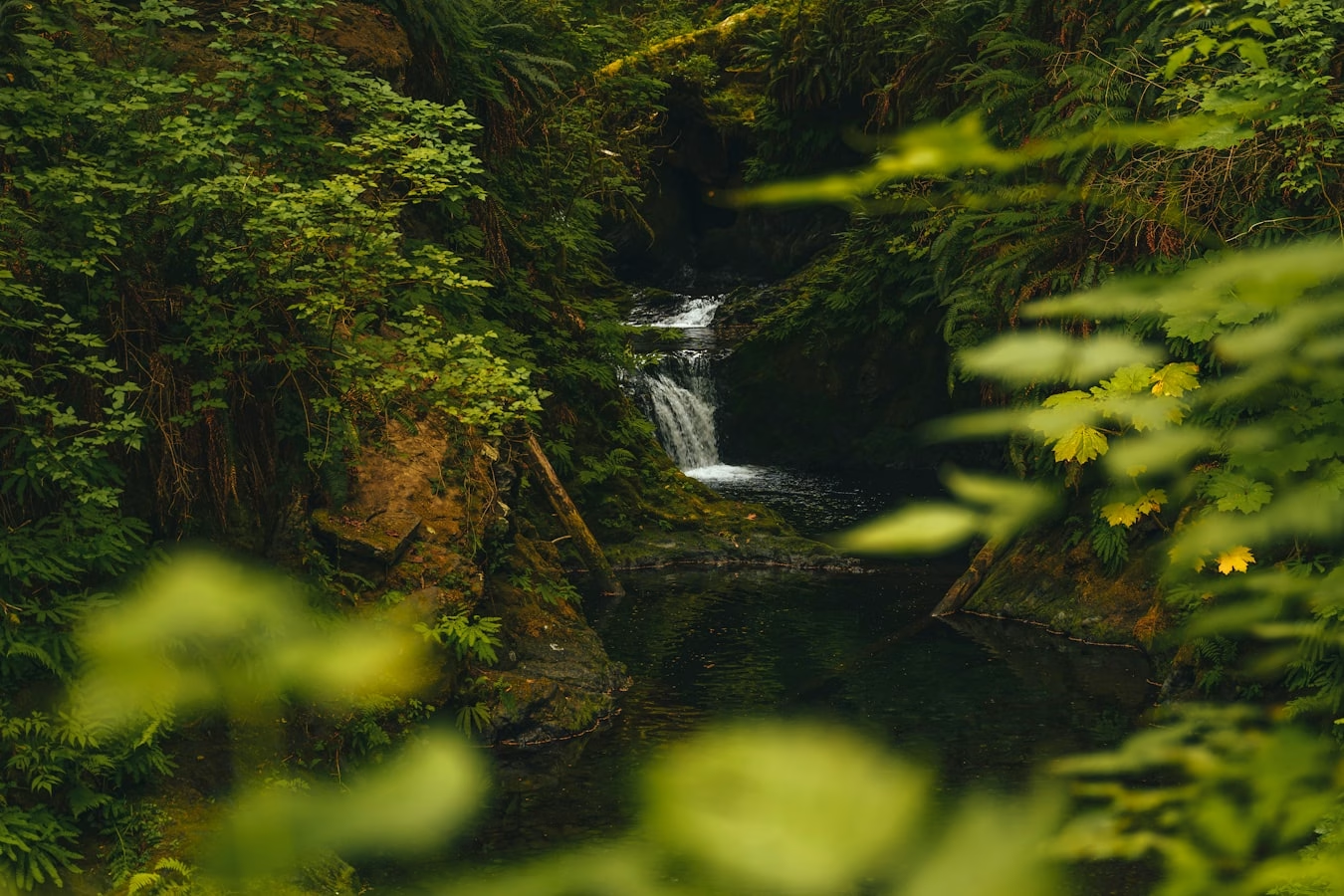
The Island of Santa Catarina (Ilha de Santa Catarina) is remembered for its beaches. But much of its fresh water is born up in the hills, inside the Atlantic Forest (Mata Atlântica) that blankets the massifs of the island’s interior. That is where the waterfalls of Florianópolis come down, some a fifteen-minute walk from the pavement, others at the end of a six-kilometer trail.
They are not on the postcard itineraries, and perhaps that is for the best. These are small falls, with shallow pools and cold water, ringed by forest that exists precisely because it protects the springs that supply the city. To know them is to know a Florianópolis that the beach-season summer tends to hide.
This guide brings together the island’s main waterfalls, with access, trail difficulty, and the conservation rules that keep these places alive. From Poção, in Córrego Grande, to Solidão, at the far south.
Why Florianópolis has waterfalls
The island has rugged terrain. Among the neighborhoods of the center-west, a ridge of hills forms the Maciço da Costeira (the Costeira Massif), a municipal conservation unit of 1,456 hectares created by law in 1995 and brought into line with Brazil’s National System of Conservation Units (Sistema Nacional de Unidades de Conservação) in 2018.
The ecosystem is dense ombrophilous forest (Floresta Ombrófila Densa), the technical name for a stretch of Atlantic Forest. The massif extends across Costeira do Pirajubaé, Rio Tavares, Lagoa da Conceição, Itacorubi, Córrego Grande, and Pantanal.
The area serves an environmental purpose: it protects the springs that feed the basins of the Itacorubi and Tavares rivers, part of the water supply for the state capital. The waterfalls rise from this conservation system; they were not created for recreation. It is worth keeping that in mind before treating any of them like a weekend swimming pool.
Poção Waterfall, in Córrego Grande
It is the most accessible of them all, and for that reason the most visited. Poção sits in the Córrego Grande neighborhood, about eight kilometers from downtown, inside a Permanent Preservation Area of the Maciço da Costeira Municipal Park.
The trail is short and easy, between 500 and 700 meters, a fifteen- to twenty-minute walk. It requires no fitness and is well signposted. Along the way there are two river crossings, so watch for wet feet and the rocks.
The falls are about seven meters high and form a natural pool of varying depth, used for bathing. The water is most abundant in the rainy months, spring and summer. Access is free, with no entrance control and no admission fee.
How to get to Poção
By car, the starting point is around Rua Sebastião Laurentino da Silva, in Córrego Grande, with parking on the surrounding streets. By bus, line 164 (Córrego Grande via Poção) leaves from the Trindade Terminal and passes near the trailhead.
An honest warning: on summer weekends, Poção fills up. Groups with barbecues and loud music are common. Anyone looking for quiet should go early, on a weekday, or choose another waterfall from this list.
Costa da Lagoa Waterfall
On the western arm of the Lagoa da Conceição lies Costa da Lagoa, a village of Azorean origin with no car access. You reach it on foot or by boat, and the route itself is part of the experience: the historic trail linking the Lagoa to the village is legally protected as heritage.
The Caminho da Costa da Lagoa trail begins at Canto dos Araçás, at the end of Rua João Henrique Gonçalves, in Lagoa da Conceição. From the entrance to the waterfall is about six kilometers, a distance that varies with your starting point. The trail is considered easy, almost entirely shaded and well marked, doable even on a day of strong sun.
Once you reach the village, a short walk of a few more minutes leads to the falls. The return can be made by shared boat, an inexpensive ride across the lagoon that makes a fitting end to the day. (The fare for the crossing varies; confirm on the spot.)
Solidão Waterfall, in the south of the island
At the far south, past Pântano do Sul, Praia da Solidão (Solidão Beach) hides a waterfall in the forest. It is the choice for anyone who wants quick nature without a long walk.
The trail is about 400 meters, a fifteen-minute stretch that is light and easy. It starts on Solidão beach itself, past the bridge, among the houses. The falls are around four meters high and form a small natural pool of icy, crystal-clear water. Access is free.
Because it lies far from the urban center, Solidão tends to be calmer than Poção. The combination of a deserted beach and a waterfall on the same outing is what makes it special.
Gurita Waterfall, in Sertão do Ribeirão
Also in the south, in Sertão do Ribeirão, Gurita brings together two waterfalls amid preserved Atlantic Forest, with pools suited for bathing.
There is more than one route. The shortest access is about 1.3 kilometers one way, from Sertão do Ribeirão. Alternative routes run to 2.8 or 7 kilometers, depending on where you begin. The difficulty ranges from easy to moderate, a step up from Poção and Solidão. Access is free.
It is a good choice for anyone who already knows the easier waterfalls and wants a walk with a bit more forest and fewer people.
What to respect at any waterfall on the island
These falls exist because the forest around them is still standing. A few precautions are simple and apply to all of them.
There are no trash bins on the trails. Whatever you carry in must come back out with you. The rocks turn slippery, especially near the falls, so wear sturdy footwear and keep an extra eye on children.
Avoid the trails right after heavy rain: the river level rises fast and there is a risk of flash flooding. Do not dive headfirst into pools whose depth you do not know. And remember that much of this land is protected conservation area, with native wildlife such as agoutis, coatis, and anteaters. Loud noise and speaker music do not suit the place, even if local habit does not always agree.
Frequently asked questions
Which waterfall is the easiest to reach in Florianópolis?
Poção, in Córrego Grande, is the simplest to reach. The trail runs between 500 and 700 meters, takes fifteen to twenty minutes, and requires no fitness. It sits about eight kilometers from downtown and is served by bus line 164.
Do you have to pay to enter the island’s waterfalls?
No. Poção, Costa da Lagoa, Solidão, and Gurita are in public or conservation areas, with no entrance control and no admission fee. The only occasional cost is transport, such as the return boat from Costa da Lagoa or the bus to the starting point.
What is the best time of year to visit?
The water is most abundant in the rainy months, spring and summer (which fall roughly from September to March in the Southern Hemisphere), when the falls run fuller and the swimming is more inviting. Summer is also the busiest season, above all at Poção. For a swim with fewer people, favor weekdays or early morning.
Can you go with children?
Yes, on the easy trails. Poção and Solidão have short, flat routes suited to families. Even so, they call for care at the river crossings and on the wet rocks near the falls. Longer trails, like Costa da Lagoa and Gurita, demand more stamina and planning.
Are the waterfalls near the beaches?
Some are. Solidão sits beside the beach of the same name, in the south of the island, and lets you combine both outings in a single day. Poção and Costa da Lagoa, by contrast, lie in the island’s interior, in the region of the Lagoa and the massifs, far from the shore.
Getting to know the island from the inside
The waterfalls say something about Florianópolis that the beach does not: it is an island of hills and forest, with water rising in the middle of the woods just a few kilometers from downtown. Those who live on the island learn to look up the hillside, not only out to sea.
At Regente, this reading of the island is part of the work. Before recommending a property, we understand the territory around it: what lies within walking distance, what exists up the hillside, what the neighborhood is really like. If you want to know Florianópolis from the inside, and not just from the postcard, talk to our curators. We know the island trail by trail.
Read also: the history of Florianópolis