When you buy a property, what are you really buying?
The obvious answer is: square meters, location, finish standards. But there’s one factor that determines long-term value more precisely than any of these — and most buyers don’t name it explicitly.
That factor is the degree of neighborhood completeness.
1. What Is a Complete Neighborhood
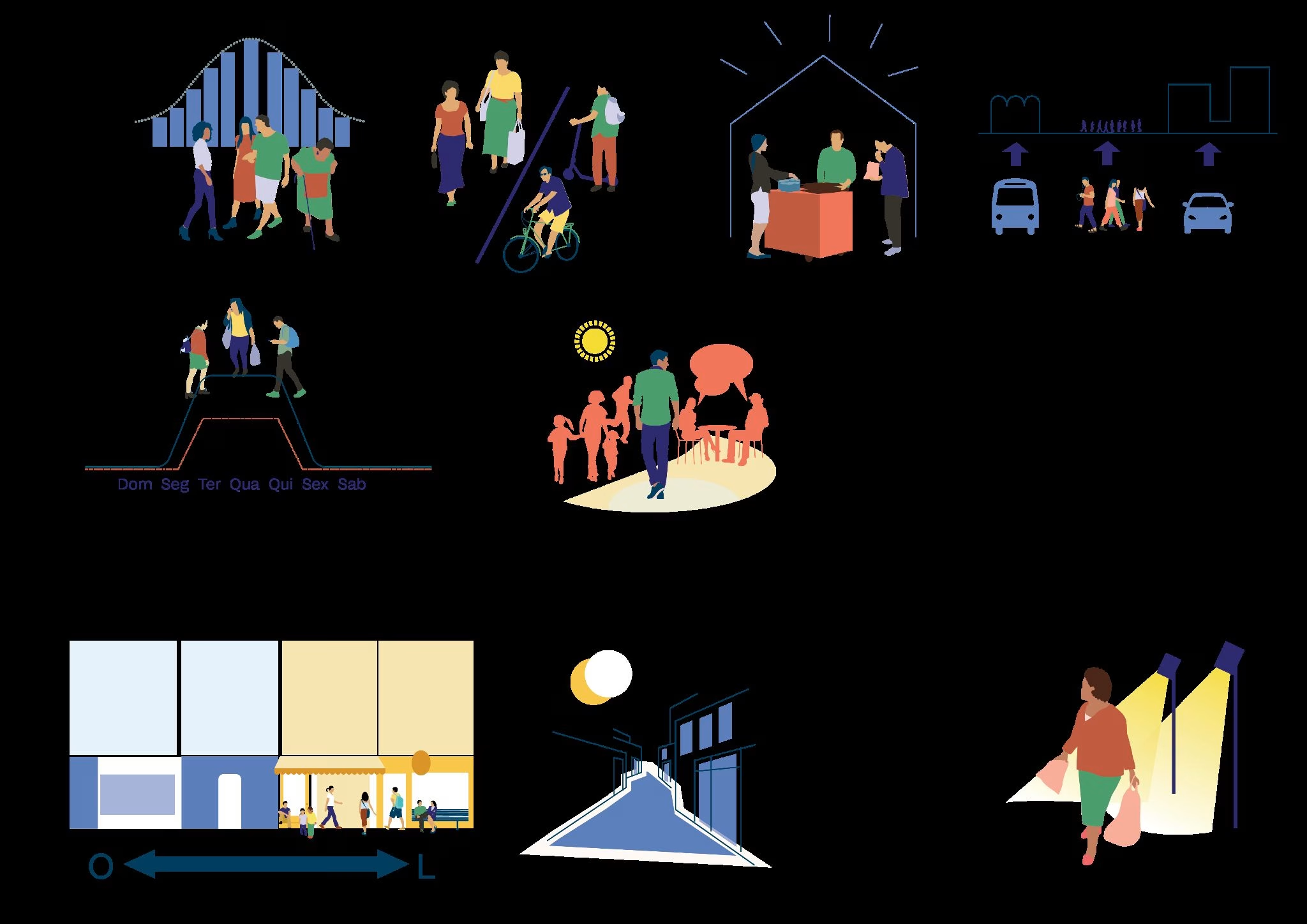
A complete neighborhood is one where most daily needs can be met on foot or by bicycle, without depending on a car or long travel. The concept was formalized by contemporary urban planning — it appears in Jan Gehl’s work, in Paris’s “15-minute cities” model, in UN urban development guidelines — but it describes something anyone recognizes intuitively.
The opposite of a complete neighborhood is not a bad neighborhood. It’s a single-function neighborhood: residential only, commercial only, offices only. When a neighborhood has one function, you need a car to access the others. When a neighborhood has several functions in the same radius, the car becomes optional.
What Defines Neighborhood Completeness
| Dimension | What It Measures |
|---|---|
| Housing | Diversity of typologies and price tiers — families, young professionals, seniors |
| Daily Commerce | Grocery store, pharmacy, bakery, butcher — routine purchases without travel |
| Services | Bank, laundry, basic healthcare, school |
| Qualified Public Space | Plaza, park, functioning sidewalk — a place to stay, not just to pass through |
| Active Mobility | Sidewalk in usable condition, bike lane, public transit stop nearby |
| Mixed-Use Vertical Development | Commerce/services on ground floor, housing above — active facades |
The more dimensions a neighborhood covers, the more complete it is. The more complete, the more desired. The more desired, the more valued — and this valuation tends to be structural, not speculative.
2. Why Complete Neighborhood and Property Price Go Together
The correlation is not accidental. It has simple market logic: property in a complete neighborhood has broader demand.
Young professional without a car seeks complete neighborhood. Family with small children seeks complete neighborhood. Senior wanting independence seeks complete neighborhood. Long-term tourist seeks complete neighborhood. Each of these profiles represents a potential buyer or renter — and the larger the demand base, the greater the liquidity and price.
Property in a single-function neighborhood serves a narrower range of buyers. It still sells, but demand is narrower, time to sell is longer, and price suffers more during market corrections.
The Effect on Rental Income Is Even More Direct
For rental, neighborhood completeness acts as a value multiplier. A 30 m² apartment in a complete neighborhood — where the tenant can handle pharmacy, grocery, gym, and coffee without leaving a 10-minute walking radius — rents for more than a 45 m² unit where you need a car for everything.
It’s not the apartment size that determines rent. It’s the effective city size the tenant accesses.
3. Complete Neighborhoods in Florianópolis: Which Are They and Why
Florianópolis has peculiar geography: island with limited access, neighborhoods separated by mountains and bridges, growth concentrated in few corridors. This means completeness varies greatly from one neighborhood to another.
The neighborhoods with historically highest completeness — Trindade, Agronômica, Downtown, Santa Mônica — have in common: established neighborhood commerce, public transit with multiple lines, supply of daily services, and functioning sidewalks.
Neighborhoods that are essentially residential — Cacupé, Rio Vermelho, parts of North Island — have high quality of life in other aspects (nature, quiet, low density), but lower completeness: for most needs, you need a car.
Downtown Florianópolis is historically the most complete neighborhood in the city — maximum concentration of services, commerce, culture, transit. The problem Downtown faced in recent decades was degradation of public space quality — poor sidewalks, chaotic traffic, absence of green space. The completeness of functions was there; the experience quality was low.
This is exactly what the Gehl Plan proposes to fix: maintain and expand Downtown’s functional completeness while improving public space quality for those using the city on foot.
4. What the Gehl Plan Proposes Specifically for Florianópolis’s Complete Neighborhoods
The masterplan delivered in February 2026 has one of its five strategies entirely dedicated to the theme: “Complete and Inclusive Neighborhoods”.
The concrete proposals:
- Active Facades on the R. Esteves Júnior → Av. Rio Branco Axis: commerce, cafés, and services on ground floors of buildings — opposite of blank garage facades that kill street life
- Incentive for Housing in Historic Core: retrofit of underutilized buildings for residential use — “living over shops” as model
- Centro Leste as Creative Hub: studios, design spaces, restaurants, and creative offices — diversification of functions beyond traditional commerce
- Reuse of Buildings Around Public Market for residential purposes — mixed-use that reduces travel dependency
All these proposals point the same direction: increase function overlap in the same territory, reduce single-function zoning, and make Downtown a more complete neighborhood than it already is.
5. How to Assess Neighborhood Completeness Before Buying
There’s no official neighborhood completeness index in Brazil (Walk Score, the American tool for this, covers few Brazilian cities). But you can do a practical assessment with some questions:
The 10-Minute Walking Test:
– Is there a grocery store or produce stand within 10 minutes walking?
– Is there a pharmacy?
– Is there a bus stop with at least two lines?
– Is there a plaza or park where you can sit?
– Is the sidewalk in actual usable condition, not just formally correct?
If yes to four or more: neighborhood with high completeness degree.
The Car-Free Week Test:
Ask: can you spend an entire week without a car, handling daily needs? If no, the neighborhood has low completeness for tenants and buyers without cars — which restricts the demand base.
Look at Ground Floors:
Neighborhood with active commerce on building ground floors has urban vitality. Neighborhood with garages and walls on ground floors has dead facade — sign of single-function residential zoning.
6. What Changes When an Incomplete Neighborhood Becomes Complete
This is the most relevant point from an investment perspective: the largest return window is the transition.
A neighborhood that is already complete is already priced as such. A neighborhood that is becoming complete — via public investment in infrastructure, via arrival of quality commerce, via public space improvement — hasn’t yet embedded that completeness in the price.
The precedents documented by the Gehl masterplan itself show the pattern:
- Brighton (UK): pedestrianization of a central corridor increased pedestrian flow 162% and retail commerce sales 33%
- Paris: school street program improved family housing desirability across multiple neighborhoods
- Copenhagen: Gehl interventions in specific corridors resulted in valuation 20 to 40% above the rest of the city
In all these cases, those who bought before the transition was priced in captured the differential. Those who bought after paid for the complete neighborhood — but did not capture the completeness process.
FAQ
What is a complete neighborhood in urban planning?
A complete neighborhood is an urban planning concept describing an area where most daily needs — shopping, services, recreation, mobility — can be met on foot or by bicycle, without depending on a car. The concept appears in Jan Gehl’s work, in the “15-minute cities” model, and in contemporary urban development guidelines. A complete neighborhood has mixed use (housing + commerce + services), qualified public space, viable active mobility, and housing typology diversity.
Why do complete neighborhoods have more valued properties?
Properties in complete neighborhoods have a broader demand base: they serve young professionals without cars, families, seniors seeking independence, and short- to medium-term renters. Greater demand means higher liquidity and price. For rental, the effect is direct: the tenant pays for city access, not just square meters — which favors compact apartments in complete neighborhoods over large apartments in single-function areas.
Does Florianópolis have complete neighborhoods?
Yes. Historically most complete neighborhoods in Florianópolis are Downtown, Trindade, Agronômica, and parts of Santa Mônica — where daily commerce, public transit, services, and functioning public space coexist. Predominantly residential neighborhoods on North Island or in expansion areas have high environmental quality but low completeness, requiring cars for most needs.
What does the Gehl Plan have to do with complete neighborhoods?
One of the five central strategies of the Gehl masterplan for Downtown Florianópolis (delivered February 2026) is explicitly called “Complete and Inclusive Neighborhoods”. The plan proposes active facades, housing in historic core, a creative hub in Centro Leste, and reuse of underutilized buildings for residential — all measures to increase function overlap and reduce single-function zoning in Downtown.
How do you know if a neighborhood is complete before buying property?
Practical test: verify whether there is a grocery store, pharmacy, and bus stop within 10 minutes’ walk of the property, whether the sidewalk is in actual usable condition, and whether there is accessible plaza or park. If yes to four or more criteria, the neighborhood has high completeness degree. Also observe building ground floors: active commerce indicates urban vitality; garages and walls indicate single-function neighborhood with dead facade.
Want to understand how neighborhood completeness degree affects your buying or investment decision in Florianópolis? Regente has been analyzing this market for over 25 years. Talk with our team.