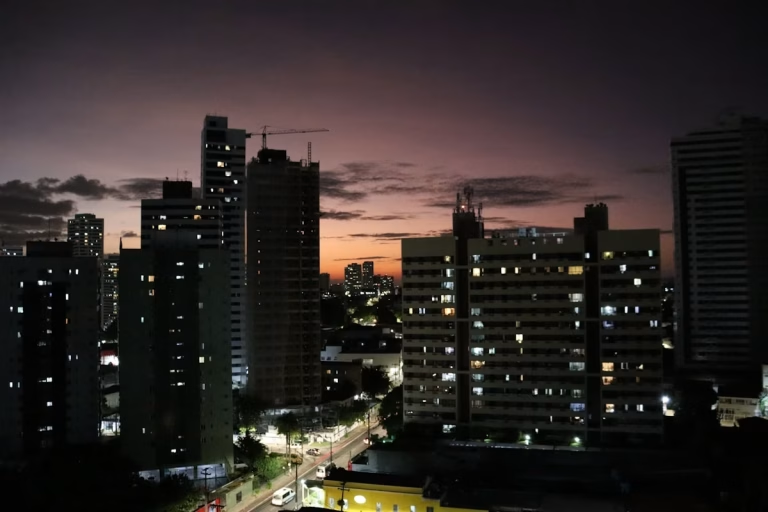
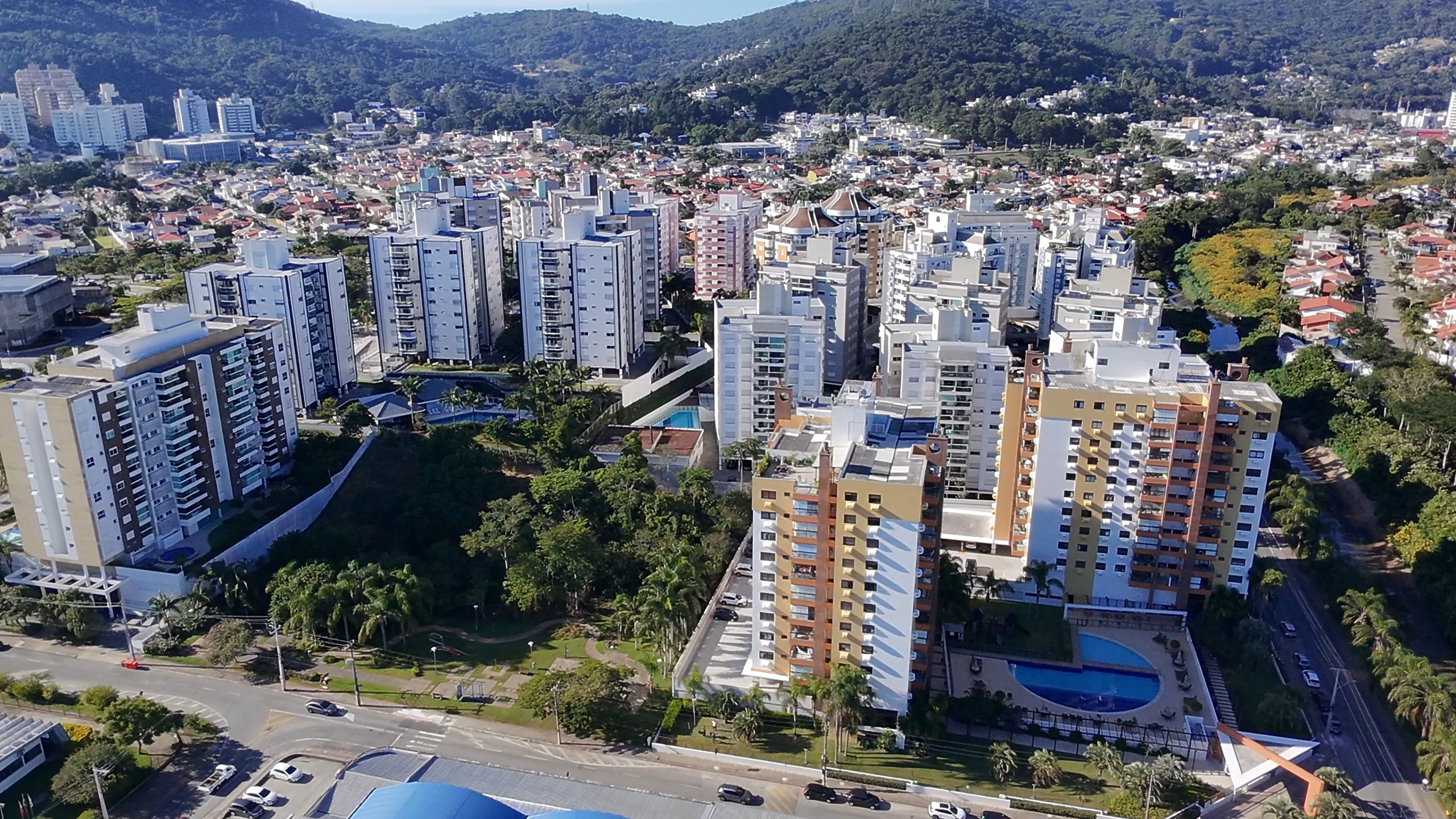
Itacorubi is the neighborhood of Florianópolis that nobody describes with a single word. It’s an institutional hub — headquarters of CELESC, EPAGRI, CEPON, FIESC, and two universities (UFSC and UDESC). It’s a gastronomic corridor on Av. Madre Benvenuta. It’s an environmental preserve — the Itacorubi Mangrove has 216 hectares of APP in the heart of the neighborhood. And it’s a medium-to-high-end residential neighborhood, quiet at night, bustling during the day.
If you’re thinking about living here, this guide brings together concrete data to help you make that decision with clarity.
Who Lives in Itacorubi?
Itacorubi is the 4th most populous neighborhood in Florianópolis according to the 2022 Census (IBGE/NSC Total). The predominant profile is young adults aged 25 to 45: civil servants at neighborhood institutions, university professors and researchers, IT and healthcare professionals, and graduate students from UFSC and UDESC.
It’s not a university neighborhood in the classical sense — most residents are beyond their undergraduate years. The rhythm is that of an established professional neighborhood: full during the day, silent at night.
The Biggest Advantages of Living in Itacorubi
Urban Greenery Within Walking Distance
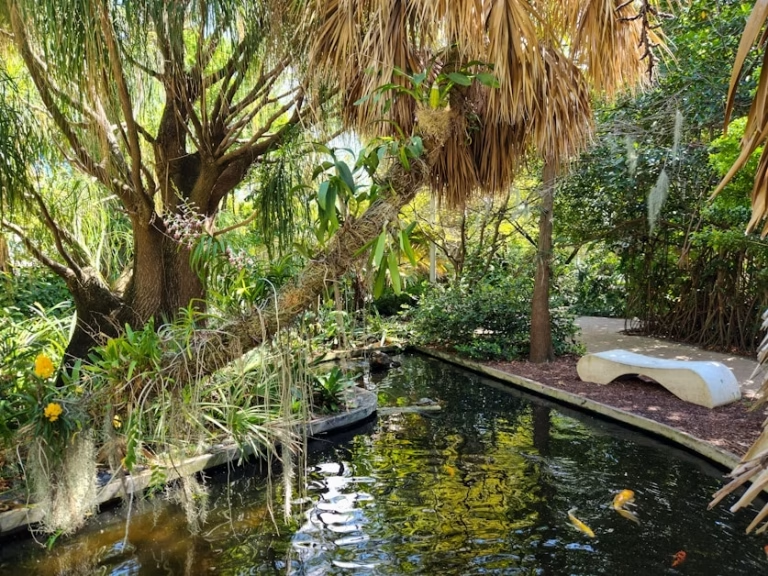
The Florianópolis Botanical Garden is on Rod. Admar Gonzaga, spans 19 hectares, and is free. Trails, lake, playground, community gardens, cactus garden, sunflower garden, and rose garden. On weekends, there are environmental education programs and guided tours. The mangrove viewing decks opened in 2024 — a new gathering spot at dusk for residents of all ages.
The Itacorubi “Fritz Müller” Mangrove — Brazil’s 2nd largest urban mangrove, spanning 216.47 hectares — is an APP (Permanent Preservation Area). You don’t live inside it, but you have it as a green horizon to the east of the neighborhood. That’s a real quality-of-life differentiator.
Specialized Healthcare Infrastructure in the Neighborhood
The CEPON (Rod. Admar Gonzaga, 655) is a state-level oncology referral center, 100% public health (SUS). For general healthcare, HU/UFSC is in Trindade, just a few minutes away. The neighborhood has no general hospital of its own — that matters if you have small children or elderly dependents who might need emergency care.
Reference-Quality Gastronomy
The Av. Madre Benvenuta concentrates the neighborhood’s largest gastronomic offering: Boteco Itacorubi, La Cave Bar, Cervejaria 4.0, Empório Capella, Tarsila Bar, plus pharmacies and daily services. It’s the living axis of the neighborhood.
On weekends, the CCA/UFSC organic farmers market and the Colonial products fair at the Botanical Garden round out the offering.
Alternative Schools with Strong Reputation
Itacorubi is one of the few neighborhoods in Florianópolis with established alternative education: Waldorf School Anabá, Montessori School CEMJ, and Autonomia School. For families seeking that educational model, this concentration is rare.
Access to the University and Corporate Hub
UDESC ESAG and CEART are on Av. Madre Benvenuta. UFSC-CCA and SENAI-SC are on Rod. Admar Gonzaga. If you work or study at any of these institutions — or at the hub’s public agencies (CELESC, EPAGRI, FIESC, CEPON) — Itacorubi eliminates your commute.
What Bothers People Who Live Here
Distance to Downtown: 8.9 km
Access to downtown Florianópolis depends on a car or bus. Without a metro line, traffic on Rod. Admar Gonzaga during rush hours can be frustrating. Congestion is especially intense at the entrance and exit of the institutions — morning and late afternoon.
Large Supermarket: None Within the Neighborhood
There are smaller markets, but for bulk shopping you need to leave the neighborhood. People coming from neighborhoods with a hypermarket nearby find this odd.
Mangrove Backdrop
Properties in the strip adjacent to the APP have a history of dampness and, in warm seasons, mosquito presence. This isn’t universal — it depends on the exact sub-region and the property’s altitude.
São Francisco de Assis Cemetery
At 9 hectares with 18,000 burial sites, it’s Florianópolis’s largest cemetery. Properties nearby have a perception of devaluation — a qualitative observation, not a technical one, but relevant in appraisal and resale.
Public Transportation
Itacorubi is served by 5 Consórcio Fênix lines with direct access to TICEN (Downtown Integrated Terminal):
| Line | Route |
|---|---|
| 165 — ITACORUBI | Circular (accessible — elevator) |
| 104 — TICEN ITACORUBI | Via Mauro Ramos — direct to downtown |
| 176 — Saco Grande | Via HU — north of the island |
| 233 — TICAN UFSC | Via Santa Mônica — UFSC access |
| 331 — TISAN TICEN | Via Mauro Ramos |
Fare: R$ 4.38 (card) / R$ 4.50 (cash). App: Floripa no Ponto 2.0.
There are bike lanes along the main axes — Av. Madre Benvenuta and Rod. Admar Gonzaga.
Safety
Residents’ perceptions and public records place Itacorubi among Florianópolis’s low-crime neighborhoods. The intense institutional presence during the day — civil servants and students — creates informal surveillance. At night the neighborhood is silent and has low pedestrian traffic.
Cost of Living in Itacorubi: Real 2025 Price Ranges
Understanding the true cost of living in Itacorubi requires more than purchase price or rental value. HOA fee, property tax, and monthly expenses make up the total cost of occupancy — and they vary significantly by property type.
The values below are market estimates based on Regente Imóveis internal data. For a precise analysis of your specific property, consult one of our consultants.
Rental by property type (real estate portals, 2025):
– Studio / 1 bedroom (up to 40m²): R$ 1,800–2,400/month
– 2 bedrooms (~65–80m²): R$ 2,500–3,500/month — the neighborhood’s most liquid segment
– 3 bedrooms (~90–120m²): R$ 3,800–5,200/month
– Houses (interior streets): R$ 4,500–7,000/month (estimate — rare product in the neighborhood)
Average HOA fee:
– Standard buildings (4–8 stories, no full amenities): R$ 400–700/month (estimate)
– Buildings with pool, gym, and party room: R$ 700–1,200/month (estimate)
Property tax reference:
Property tax in Itacorubi varies by the property’s assessed value and fiscal zone. For a 2-bedroom apartment with market value around R$ 800,000, annual property tax is estimated at R$ 1,800–2,800/year (estimate — check PMF’s fiscal calendar for your specific property). Payment in a single installment guarantees a 10–15% discount depending on the municipal fiscal calendar.
Total monthly cost estimate (renter, 2 bedrooms):
– Rent: R$ 3,000
– HOA fee: R$ 600 (estimate)
– Property tax prorated: R$ 200
– Total: ~R$ 3,800/month (estimate with average HOA fee)
What Changed in 2024–2025
Itacorubi has undergone some concrete changes in the past two years that affect both quality of life and the neighborhood’s real estate market.
Mangrove Viewing Decks (2024):
The opening of the viewing decks at the Botanical Garden created a new, heavily-used leisure amenity. Evening time on the decks has become a daily activity for residents — especially cyclists, families with children, and professionals working in the neighborhood. The amenity expanded the Botanical Garden’s use from weekends to every day of the week.
New residential developments:
– Maria Augusta Residential: development across from UDESC, with 5 towers and 2–3 bedroom units. Added new inventory of modern properties in the neighborhood’s most liquid axis.
– Smart Living Studio 2855: studios on Rua Amaro Antônio Vieira, targeted at university students and IT professionals. Signals growth in the studio segment in the corridor — a trend to monitor if you’re investing in that category.
Commercial activity on Av. Madre Benvenuta:
The avenue maintained and expanded its restaurant and bar offering. Activity Thursday through Saturday remains consistent — a sign of a neighborhood with real resident demand, not seasonal tourism-dependent.
What Hasn’t Changed:
The mangrove remains untouchable APP. Moderate building height persists. Institutional demand — CELESC, FIESC, UDESC, CEPON — hasn’t declined. The neighborhood’s DNA of medium-to-high-income residents valuing urban quality of life with accessible greenery remains intact.
For anyone evaluating available properties in Itacorubi right now, it’s an active market but not overheated — with room to negotiate on older properties and new inventory arriving via recent launches.
Frequently Asked Questions About Living in Itacorubi
Is Itacorubi a good neighborhood to live in in Florianópolis?
Yes, especially for those who work or study at corridor institutions (CELESC, EPAGRI, UDESC, FIESC, CEPON, UFSC-CCA). The neighborhood combines quality of life with nighttime quiet, access to the Botanical Garden and Mangrove, and rent ~11% below Trindade. The main drawback is distance to downtown (8.9 km) and the lack of a hypermarket within the neighborhood.
What’s the profile of people who live in Itacorubi?
Young adults aged 25 to 45: civil servants at neighborhood institutions, university professors and researchers, IT and healthcare professionals, and graduate students from UFSC and UDESC. It’s not a classical university neighborhood — the rhythm is that of an established professional neighborhood: full during the day, silent at night.
Are there good schools for children in Itacorubi?
Yes. The neighborhood has established alternative education options: Waldorf School Anabá, Montessori School CEMJ, and Autonomia School. This concentration is rare in Florianópolis. Conventional public schools also serve the neighborhood.
What’s public transportation like in Itacorubi?
5 Consórcio Fênix lines with access to TICEN. Lines 165-ITACORUBI and 104-TICEN have the highest frequency. There are bike lanes on Av. Madre Benvenuta and Rod. Admar Gonzaga. Fare: R$ 4.38 (card) / R$ 4.50 (cash). App: Floripa no Ponto 2.0.
Is traffic bad in Itacorubi?
On interior streets, traffic flows smoothly. Heavy traffic concentrates on Rod. Admar Gonzaga and SC-401 during rush hours (7:30–9:00 am and 5:00–7:00 pm). People living on interior streets and not using the highway daily feel little impact.
What’s the difference between living in Itacorubi and Trindade?
Trindade is next to UFSC’s central campus and has more commerce — and charges ~11% more in rent. Itacorubi has two campuses within the neighborhood (UFSC-CCA and UDESC CEART), a quieter nighttime profile, and more accessible square footage. For those studying or working in the UDESC/UFSC-CCA corridor, Itacorubi offers the best value in the university hub.
Conclusion: For Whom Does Itacorubi Make Sense?
Itacorubi is the right neighborhood for those who work or study at corridor institutions (CELESC, EPAGRI, UDESC, FIESC, CEPON), for those who value accessible urban greenery within walking distance, and for those who prefer quiet nighttime quality of life over areas with bars and constant activity.
It’s not the neighborhood for those who need everything on the sidewalk. It’s the neighborhood for those who prefer to come home and hear the birds.
Regente Imóveis knows each sub-region of Itacorubi — from the Madre Benvenuta axis to interior streets — and guides those who want to live or invest with real data and no sales pitch. Consult the Itacorubi investment guide, view available properties in the neighborhood, or request a free appraisal to understand the true value of the property you’re analyzing.
Source: IBGE 2022 Census (via NSC Total), Consórcio Fênix, PMF, CEPON, NDMais 2024, Regente Imóveis field research 2025–2026.