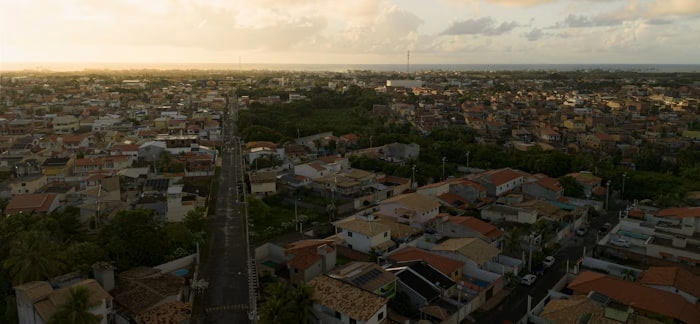
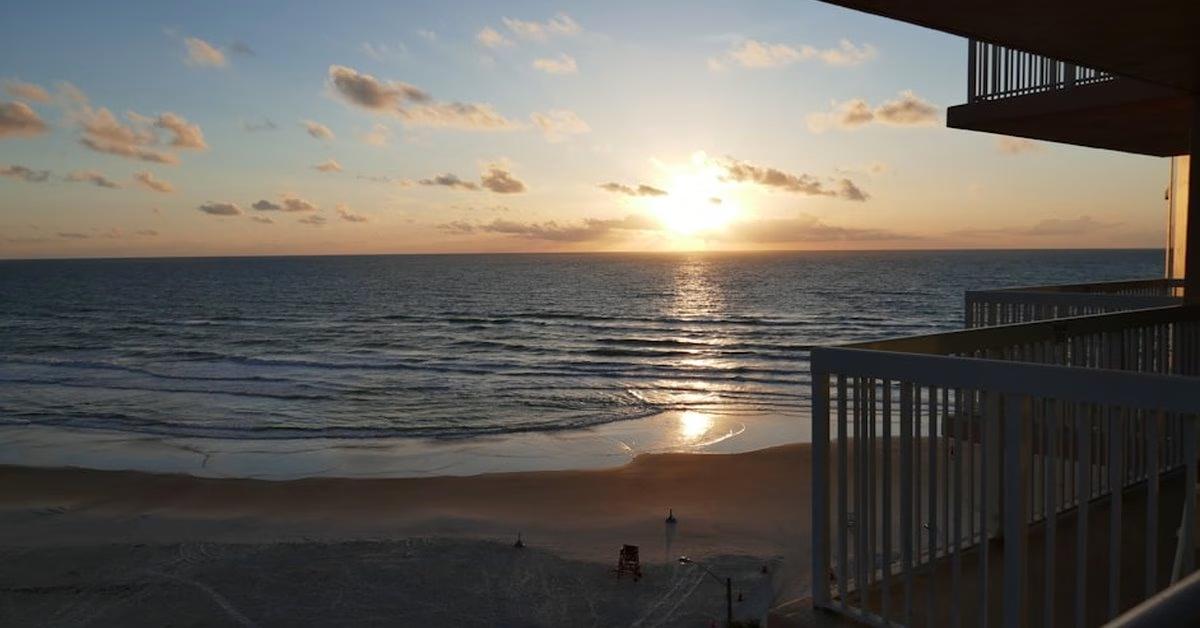
If you own a property sitting idle or leased on a long-term contract in Florianópolis, July 2026 opens a short window of rental revenue. The World Cup moves the global travel calendar from June 11 to July 19, and part of that movement reaches southern Brazil, even though the city is not on the official tournament map.
Florianópolis is not a host city. Games are held in the United States, Mexico, and Canada. Still, the city entered 2026 as the 8th most-booked destination on the planet, according to the eDreams ODIGEO report. For property owners or investors, the practical question is simple: how do you turn high winter and July holiday demand into seasonal rental revenue.
This guide starts from context, shows why the Island captures the flow without hosting any matches, compares seasonal rental to long-term leases, and closes with what you need ready to rent during this window.
What the 2026 World Cup Does to Accommodation Demand
The 2026 World Cup heated up the search for accommodation. Lodging inquiries in host cities grew by at least 80% compared to the same period in 2025, according to platform data disclosed by Times Brasil (2026).
In areas around U.S. stadiums, nightly rates skyrocketed. In some U.S. host regions, the price per night jumped to over USD 6,000, a 140% increase from the previous year, according to Diário do Povo (2026). Deloitte projects more than USD 200 million distributed to hosts during the tournament, per research by Exame (2026).
There is a counterweight the property owner must see before pricing. Actual occupancy in host cities fell short of expectations less than a month before the start: Philadelphia posted 42% bookings in the group stage, according to Exame. The 80% figure reflects search interest, not confirmed reservation. The lesson applies to any market: pricing far above reality tanks conversion.
Why Florianópolis Captures the Flow Without Being a Host City
Capture here is indirect, and works through three channels. The first is the weight of the city itself as a destination. Florianópolis ranked 8th globally in most-booked destinations for 2026, the only Brazilian city in the top 10, according to De Olho na Ilha (2026).
The second channel is the calendar. July concentrates Brazilian school holidays and coincides with the Copa’s final stretch. Many Brazilians do not travel to the United States because of airfare, ticket, and exchange-rate costs, so they choose domestic destinations. The Island appears as a winter option in the South with mild temperatures and easier access than in summer.
The third channel is already-installed tourism infrastructure. Hercílio Luz Airport handled more than 1 million international passengers in 2025, a 356% increase over seven years, according to De Olho na Ilha (2026). The city also set up official Fan Fests at Balsão da Casan and Beira-Mar Continental for Brazil’s matches, which concentrates local and visiting crowds on game dates.
Winter is no longer off-season on the Island. Local operators describe July as a second occupancy peak in the family segment, although the exact July occupancy rate for the city remains a figure to confirm with seasonal rental operators.
How Much Seasonal Rental Yields Compared to Long-Term Leasing
The revenue gap between the two models is large. In Florianópolis, well-structured seasonal rental operations reach 14.3% annually, according to Gralha Imóveis (2024). Long-term leasing in the same market yields about 5.55% gross annually, per the FipeZAP index (2026), with net returns typically between 3% and 4.5%.
This higher return comes with a cost. Seasonal rental requires furniture, active management, cleaning between guests, and more frequent maintenance. The rental platform charges around 3% of host revenue, and the property must be furnished, with an equipped kitchen and linens. The table below summarizes the comparison.
| Model | Annual Return | Notes |
|---|---|---|
| Long-term lease | 3.0–4.5% net (5.55% gross) | Lower risk, simple management |
| Seasonal rental in tourist neighborhood | 10–18% gross | Requires furniture, active management, maintenance |
| Seasonal rental in July peak | Nightly rates 30–70% above regular winter (to confirm) | Window of about 6 weeks |
The average nightly rate for an apartment with pool in the city hovers around R$ 1,188 (to confirm), with simpler properties starting from R$ 145 per night (to confirm). These values need verification through direct platform date searches, because they vary by neighborhood, property standard, and season. The projection of nightly rates 30% to 70% above regular winter for July 2026 is an estimate to confirm with the same research.
What the 2014 World Cup Teaches, and What Does Not Repeat
The previous World Cup in Brazil showed the direct effect of a tournament on rental revenue, and serves as historical reference. In Rio de Janeiro in 2014, a two-bedroom apartment in Copacabana went from R$ 350 to R$ 1,400 per night during the event, a 300% increase, according to ESPM Journalism (2014). A flat in Ipanema rose from R$ 834 to R$ 2,582 per night, a 210% increase.
There was also property appreciation in host cities. In São Paulo, apartments in Itaquera near the arena appreciated 50% since construction began, according to the blog Judice & Araujo (2024). In Fortaleza, the residential price per square meter near the stadium went from R$ 3,581 in 2011 to R$ 7,374 in 2024.
The 2026 context works differently. Florianópolis receives no stadium construction or massive international flow because of the tournament. The gain here stays in rental revenue during the winter window, and the property appreciation of the Island follows its own logic, independent of the Cup. This foundation already appears in the data: 9.44% appreciation in 2025, versus 5.2% national average, with average price of R$ 13,208 per square meter in April 2026, per the FipeZAP index (2026). The Cup adds visibility to the destination, and the engine of price continues to be demand for the city itself.
How to Capture Demand During This Window
The window is short and already open. Long stays, from 10 to 14 days, are mostly already booked. What remains is demand for 3 to 7-day stays, concentrated in the weeks of decisive matches and at the height of July holidays. Listing the property now still captures part of this movement.
Three steps handle the operational side. First, check your building’s bylaws, because some prohibit seasonal rental and violating them incurs fines. Second, prepare the property with basic furniture, linens, Wi-Fi, and an equipped kitchen, remembering that heaters and air conditioning matter in Santa Catarina’s winter. Third, price with a moderate premium, between 50% and 100% above regular winter nightly rate, instead of chasing the maximum price and leaving the property empty.
Smart pricing is the critical point. The case of U.S. host cities, with 42% occupancy versus prices three times higher, shows that a moderate premium with full occupancy yields more than a high premium with vacancy. Occupying the property generates more revenue than waiting for the record nightly rate.
For those who do not want to become innkeepers, third-party management exists. Seasonal rental operators charge between 15% and 25% of revenue and handle cleaning, guest service, and maintenance. For the property owner tired of self-managing, or who lives far from the property, this path transforms the World Cup window into revenue without daily work.
Frequently Asked Questions
Will Florianópolis host 2026 World Cup matches?
No. The 2026 World Cup takes place in the United States, Mexico, and Canada, from June 11 to July 19. Florianópolis is not a host city. The city joined the celebration by another route: official Fan Fests were confirmed at Balsão da Casan and Beira-Mar Continental for Brazil’s matches, and July coincides with Brazilian school holidays, which ensures high domestic tourism demand regardless of the event.
Is it worth listing my property for seasonal rental during the World Cup?
It depends on location and property readiness. In Florianópolis, well-located and furnished seasonal rental properties yield between 10% and 14% annually, and July is historically one of the peak months in the second half of the year. The Cup broadens the context, because Brazilians not going to the United States tend to choose domestic destinations during July holidays. The attention point is pricing: properties with prices far above market have more difficulty converting bookings, as shown by the experience of hosts in U.S. host cities.
How much does seasonal rental yield compared to long-term leasing in Florianópolis?
Well-managed seasonal operations in Florianópolis reach 14.3% annually, according to Gralha Imóveis, while long-term leasing yields about 5.55% gross annually per the FipeZAP index of January 2026, with net returns between 3% and 4.5%. The difference comes with cost: seasonal rental requires furniture, active management, cleaning between guests, and more frequent maintenance, plus a platform fee around 3%. Furniture investment typically pays back in 12 to 24 months for properties in good locations, but this depends on actual occupancy rate.
Which neighborhoods in Florianópolis have the most seasonal rental demand in July?
Neighborhoods with best historical performance are on the Island’s North Coast, such as Jurerê, Canasvieiras, and Ingleses, plus Lagoa da Conceição and Campeche. In July, demand spreads more geographically than in summer, with growing interest in Downtown, Trindade, and Itacorubi for remote-work stays and families. A property with a heater or fireplace has an edge in Santa Catarina’s winter.
Are there legal risks to listing a property for seasonal rental in Florianópolis?
The main risk lies in the building bylaws. Some buildings prohibit seasonal rental by internal regulation, and the owner must verify before advertising, because violation can result in warnings and fines. From a legal standpoint, seasonal rental is governed by Article 48 of the Tenant Protection Law, with a maximum of 90 consecutive days. Shorter contracts do not require guarantees, but it is advisable to require a security deposit via the platform. There is no specific municipal restriction in effect for seasonal rental in Florianópolis as of this publication date.
Does it make sense to buy a property in Florianópolis now with the World Cup in mind?
The Cup is not the main argument for purchase, because the Island’s market has its own fundamentals. Average price per square meter reached R$ 13,208 in April 2026, per the FipeZAP index (2026), with 9.44% appreciation in 2025 versus 5.2% national average. The Cup raises the city’s visibility and may concentrate rental demand in the coming weeks, but buying with only the event in mind misses the window for immediate use. The real argument is the established tourism destination, with accelerating international tourist growth.
Now that the World Cup has started, is there still time to list my property?
There is still a window, but it is short. Long-duration reservations, from 10 to 14 days, likely are already booked. The remaining potential is for 3 to 7-day stays, especially in the weeks of Brazil’s decisive matches and during the July holiday period. Listing the property now still captures part of the demand, but maximum returns require advertising with at least 30 to 60 days’ notice. For the next cycle, preparation starts now.
Is it better to manage myself or hire a seasonal rental operator?
For the immediate World Cup window, in June and July 2026, direct management gives more control over pricing and availability, but requires time from the owner or hiring a co-host. For those without time or living far from the property, specialized operators charge between 15% and 25% of revenue and resolve cleaning, guest service, and maintenance. The hybrid model, with personal advertising in the short term and an operator in the medium term, typically is most efficient for those who do not want to become innkeepers.
Conclusion
Florianópolis does not play the Cup, but plays the hospitality game. The combination of desired winter, July holidays, and the Island’s position as the 8th most-booked destination in the world creates a real revenue window for property owners. Well-structured seasonal rental yields close to 14% annually, versus 5.55% gross from long-term leasing, and July is one of the peaks in the second half of the year.
The property owner who captures this demand arrives prepared: building bylaws checked, property furnished, and price tuned for occupancy. The window expires at the end of July, and the operational side requires some days of organization before the listing goes live.
If you want to rent your property seasonally and do not want to handle advertising, pricing, and guest service yourself, Regente handles rental brokerage for you. Talk to our team and put your property to work this winter rental season.