Sports Tourism: Marathons, Rowing, Surf, and Wind Sports in Florianópolis
If you think of Florianópolis as a destination, beaches usually come to mind first. But the city is also a consolidated sports destination, with an international marathon, century-old rowing clubs, and winds that attract athletes from around the world. This profile of tourism says a lot about who chooses to live here, not just visit.
The island brings together conditions that few Brazilian cities have at the same time: terrain with flat stretches and real climbs, a protected bay for rowing, and constant winds on the east coast. Each sport found its place in the local geography. That’s why sports tourism here is not an artificial niche, it’s a direct reflection of the territory.
The International Marathon of Floripa and the Label of Brazil’s Sports Capital
The 2025 International Marathon of Floripa brought together between 19,100 and 19,200 registered athletes across the 42 km, 21 km, and 5 km races, a jump from the 16,500 in 2024. Of those registered, 15,439 completed the race. The growth certified Florianópolis as what the sports press has been calling “Brazil’s sports capital” ND+ (2025).
The event moves the city for an entire weekend, and the impact is not only sports-related. Outside athletes bring family, stay longer, and discover neighborhoods that would rarely appear in a conventional tourist itinerary Source (2025).
Going from 16,500 to almost 19,200 registered participants in one year is not an isolated jump. It’s a sign of a sports calendar that has matured, with structure and tradition enough to sustain this growth year after year.
It’s worth noting that the 15,439 finishers represent the majority of registered participants completing the course, which indicates that support infrastructure (hydration, route, safety) keeps pace with participant volume, and not just the size of the event on paper.
The Three Rowing Clubs That Founded the City’s Nautical Tradition
Florianópolis has one of the oldest rowing traditions in the country, and here it’s worth correcting something that often circulates incorrectly: the foundational and historically traditional clubs are three, not four.
They are the Clube Náutico Riachuelo (1915, blue and white), the Clube Náutico Francisco Martinelli (1915, red and black), and the Clube de Regatas Aldo Luz (1918). The three were founding members of the Federação Catarinense de Remo, created in 1919 ND+, Federação de Remo SC.
It’s worth confirming before repeating it elsewhere: a recent report mentions “four clubs” competing in the current State Championship. This describes today’s competition, which may include an additional club without foundational roots, not the city’s historic core. In editorial content, the correct term is “three traditional clubs”: Riachuelo, Martinelli, and Aldo Luz.
This tradition of more than a hundred years shows up in the urban landscape: the clubs’ headquarters sit on the waterfront, and rowing is still practiced regularly in the bay’s calm waters.
Rowing helped shape the sports identity of Santa Catarina’s capital decades before beach tourism became synonymous with the city. Riachuelo, Martinelli, and Aldo Luz existed decades before Florianópolis became a mass vacation destination, an older, and less told, chapter of local sports history.
Why Florianópolis Became a Hub for Kitesurfing, Windsurfing, and Sandboarding
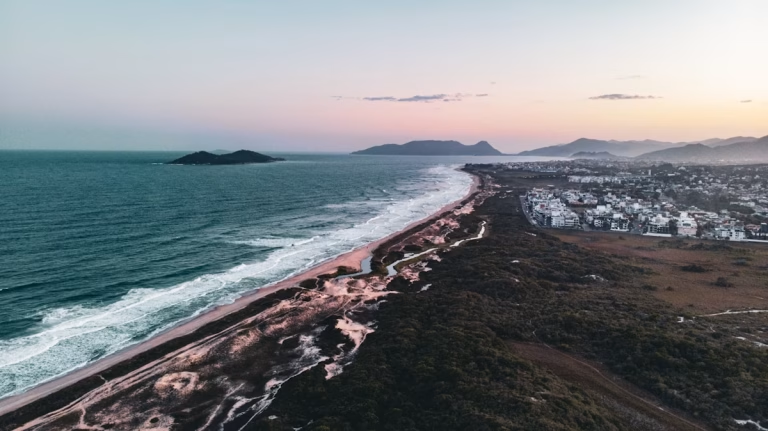
The island’s terrain and wind regime create rare conditions for wind sports. Florianópolis has about 250 days per year suitable for kitesurfing, close to 70% of the annual calendar. The city concentrates hubs by skill level: Lagoa da Conceição welcomes beginners, while Mole Beach attracts advanced practitioners Guide Floripa.
The Campeche Beach Festival of Windsurf and Kitesurf reinforces this profile, seeking to bring world circuit stages to the city Litoral de Santa Catarina.
This geographic division by skill level is no accident. Lagoa da Conceição has more protected waters and more predictable wind, ideal for beginners; Mole Beach, on the other hand, faces open ocean, which demands more technical mastery. People who travel to practice already know this and choose their accommodation, or, in a growing number of cases, the neighborhood to live in, based on this division.
There is also a little-explored historical curiosity: sandboarding, today practiced on dunes in various parts of the country, has a documented origin in Florianópolis in the 1980s, as a direct variation of snowboarding. The city is not just a destination for the sport, it’s where it was born in Brazil.
About other activities, combat sports or board games like taekwondo, jiu-jitsu, boxing, or chess, it’s worth confirming before stating volume or relevance: the presence of gyms in the city is plausible, but there is no quantitative data gathered so far. [verify]
The division by beach also matters for those thinking about moving. Beginner or advanced, each practitioner profile has a stretch of the waterfront that already recognizes as theirs, and this often weighs when choosing where to live, especially for those who practice wind sports as routine, not just on vacation.
What Sports Tourism Reveals About Who Chooses to Live in the City
People who come to run the marathon, row in the bay, or catch wind at Lagoa tend to come back, and some of those people come back to stay. Understanding this profile helps explain why neighborhoods near the waterfront and nautical club headquarters attract an audience that doesn’t seek just scenery, but a sports routine.
This resident doesn’t choose the neighborhood for the view, they choose it for the distance to the club headquarters, to the training track, or to the right wind point. It’s a logic of territory occupation different from the traditional vacationer’s, and it shapes demand for properties in specific regions of the island year-round, not just in high season.
This is just one of several tourism profiles that shape who moves to Florianópolis. To understand the complete picture, business, gastronomy, faith, and culture included, see the guide learn more.
Frequently Asked Questions
How many athletes participated in the 2025 International Marathon of Floripa?
Between 19,100 and 19,200 athletes registered for the 42 km, 21 km, and 5 km races, with 15,439 finishers, a jump from the 16,500 registered in 2024.
How many traditional rowing clubs are there in Florianópolis?
Three: Clube Náutico Riachuelo (1915), Clube Náutico Francisco Martinelli (1915), and Clube de Regatas Aldo Luz (1918). They were the founders of the Federação Catarinense de Remo in 1919. References to “four clubs” refer to the current composition of the state championship, not the foundational tradition.
Why is Florianópolis good for kitesurfing and windsurfing?
Because it has about 250 days per year with favorable winds, close to 70% of the calendar. Lagoa da Conceição concentrates beginners and Mole Beach receives advanced practitioners, with their own festivals like the Campeche Beach Festival of Windsurf and Kitesurf.
Did sandboarding originate in Florianópolis?
There is documented record that sandboarding, as a variation of snowboarding, has its origin in Florianópolis in the 1980s, before it spread to other dune regions in the country.