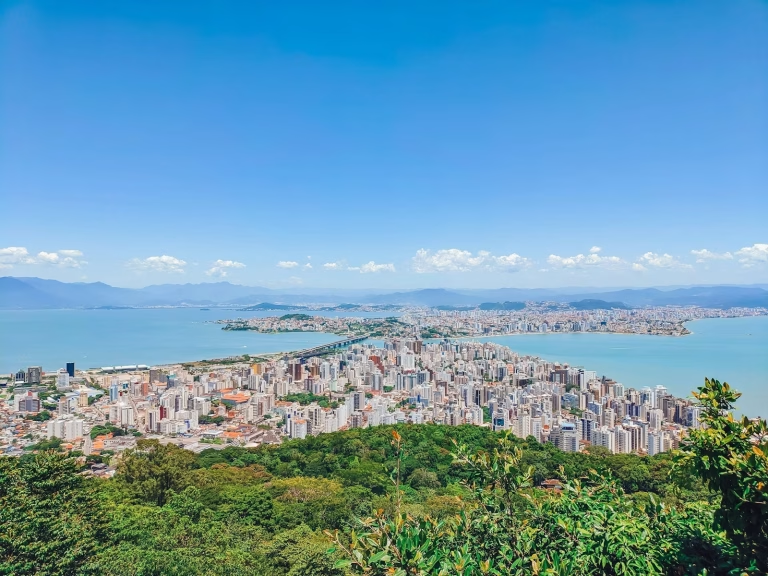
Late one afternoon, at a restaurant on the southern end of the Island, grilled octopus arrives at the table as if it had always belonged there. It looks like a dish that has always been local. It hasn’t. It carries the signature of a man who came from far away, changed the life of a fishing village, and then slowly slipped from memory.
His name was Noboru Oda. Few hold onto it today. But there was a time when Armação do Pântano do Sul would not forget Seu Oda for anything.
This is his story, and the story of a southern Island that no longer exists.
Armação Before Seu Oda
Before the 1950s, Armação do Pântano do Sul lived like so many other Azorean settlements on the Island: off the sea, with little. Fishing was done by trawling, a technique the descendants of the Azorean settlers had practiced for generations. It yielded enough to eat, rarely much more.
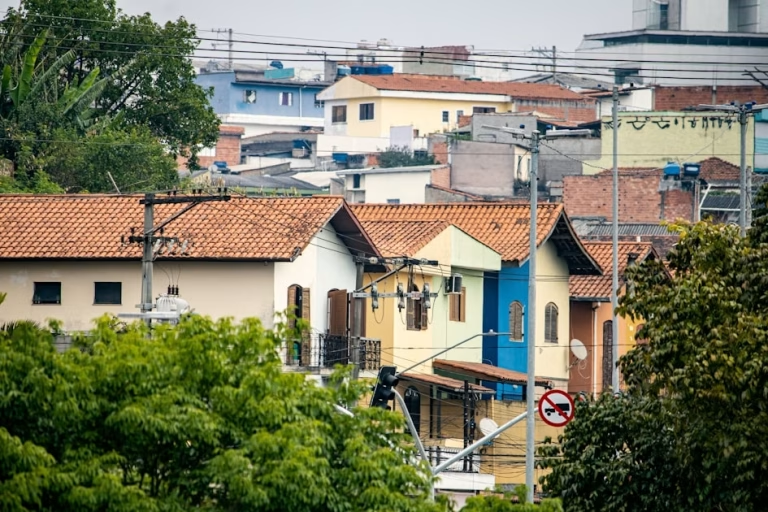
The houses were made of stucco, with thatched roofs. Abundance came in good seasons and ran short in bad ones. It was a modest life, of people who knew the sea up close and expected from it whatever it chose to give.
From Kagoshima to the Island
It was into this setting that Noboru Oda arrived, coming from Kagoshima, in southern Japan. Japanese immigration in Santa Catarina never formed large colonies on the Island, unlike what happened in the interior of the state, in the mountain region, from the 1960s onward. On the Island, the arrival was something else: quiet, individual, a family here, a fisherman there.
Oda was one of these. He did not come with a wave, he did not found a community. He came with what he knew, and what he knew would transform Armação.
The Net That Changed Everything
What Oda brought from Kagoshima was the technique of the purse seine net. Instead of dragging the net along the seabed, the school of fish was encircled.
They say that the first time the net was cast in Armação, the catch came in dozens of times larger than the usual trawl. It was not luck. It was method, brought from a place where the sea was read another way.
For a village that lived on the edge between plenty and want, the effect was immediate.
A Village with a New Life
With the purse seine net, fishing stopped being a gamble and became income. And income changed the place. Much of the stucco housing gave way to sturdier, more comfortable construction.
Oda also looked at what the fishermen threw away. Octopus and squid, seen as worthless, went back into the sea after every catch. He showed that there was food there, and good food. He taught dishes and introduced ingredients no one used in the area, such as bamboo shoots.
The south of the Island ate differently from then on, without knowing it was learning from a man from Kagoshima.
The Legacy on the Island’s Table
Today Florianópolis is a UNESCO Creative City of Gastronomy, a title that rests on its identity tied to the sea: the oyster, the mullet (tainha), the fresh catch.
Part of that table, however, carries an accent almost no one recognizes. That grilled octopus from the start of the story, the squid that is now a fixture on menus across the south of the Island, the habit of making use of what was once discarded: it is Seu Oda’s legacy. The Island forgot him, but it still eats what he taught.
The Day Armação Stood Still
Noboru Oda died in 1979. And that is when the measure of what he meant to those people becomes clear.
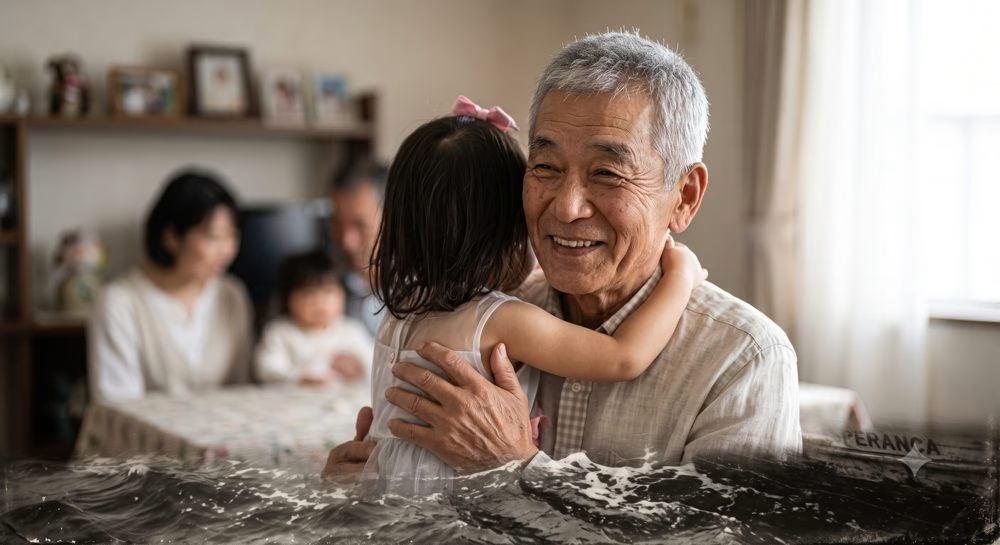
They say that on the day of the burial, Armação came to a standstill. The schoolchildren all came to say goodbye. It was not the funeral of a foreigner who had passed through the village. It was the funeral of someone the village recognized as its own.
Perhaps that is the truest measure of a life: not the name that survives in books, but the silence of an entire village on the day of farewell.
Frequently Asked Questions
Who was Noboru Oda?
Noboru Oda was a Japanese immigrant, born in Kagoshima, who settled in Armação do Pântano do Sul, on the south of Santa Catarina Island, in Florianópolis, Brazil, in the 1950s. He introduced the purse seine net technique to local fishing and transformed the region’s economy and cuisine.
What is the purse seine net?
It is a fishing technique in which the net encircles the school of fish, rather than being dragged along the seabed. Brought by Oda, it multiplied Armação’s catch compared to the trawling practiced before.
When did the Japanese arrive in Santa Catarina?
Japanese immigration to Brazil began in 1908, through the port of Santos. In Santa Catarina, the agricultural colonies formed later, from the 1960s onward, concentrated in the interior and the mountains. On Santa Catarina Island, the presence was individual and more discreet.
Why did octopus become a dish in the south of the Island?
Before Oda, Armação’s fishermen discarded octopus and squid, considered worthless. He showed that they were food and taught how to prepare them, bringing them into the local kitchen.
Where is Armação do Pântano do Sul?
It is a neighborhood and former fishing village at the far south of Santa Catarina Island, in Florianópolis, Brazil, known for its beach, its fishing tradition, and the old whaling station (armação) that gives the place its name.
The Island changes fast. Where nets once dried in the sun, there are now guesthouses and restaurants. And stories like Seu Oda’s survive only in the memory of the elders, until someone tells them again.
To know Florianópolis from the inside is exactly this: to understand that every dish, every beach, and every name carries a story that isn’t on the sign. That is the perspective that guides Regente. If you want to live on the Island with people who truly know it, talk to a consultant, and follow the Memória da Ilha (Island Memory) series, about the Florianópolis that goes unnoticed.