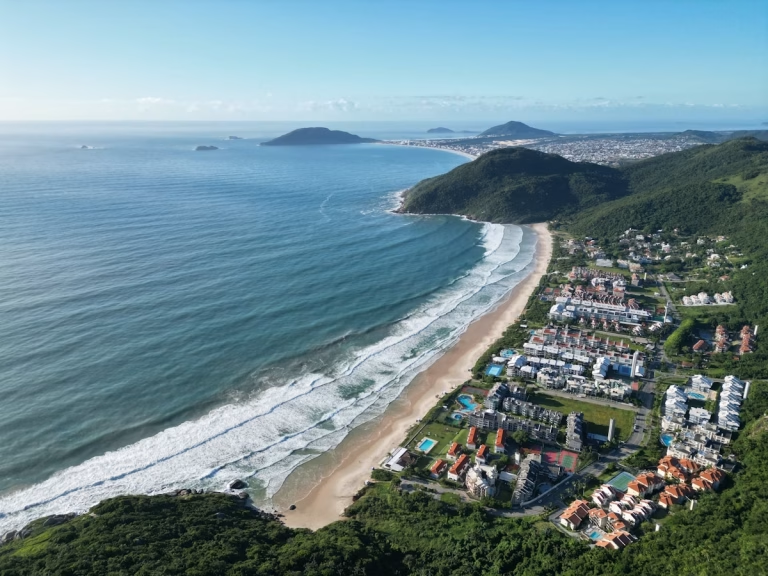
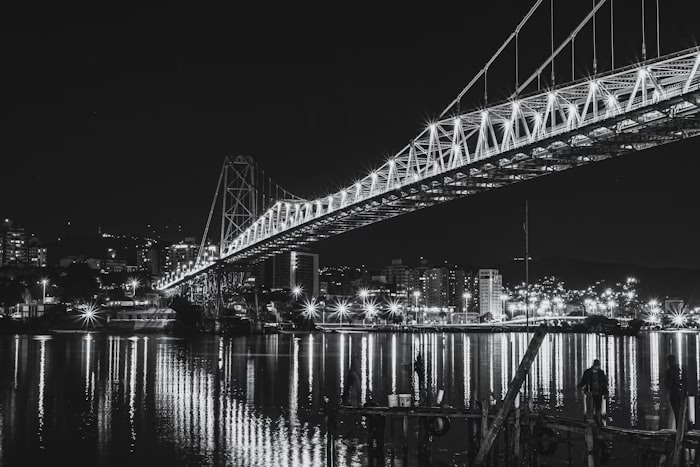
Florianópolis is, physically, more island than city. The old town and its beaches sit on a slab of granite and Atlantic dune ringed by water on nearly every side, tied to the Brazilian mainland by a handful of bridges — the oldest and most photographed of them, the Hercílio Luz, has stood as the city’s landmark since 1926. Ocean beaches run down the island’s east and south flanks. Inland, a lagoon and mangrove system splits the land in two, so that a fifteen-minute drive can move you from surf break to still water.
Locals call the place “Ilha da Magia” — the Magic Island — a nickname rooted in Azorean folk stories about witches and enchantment that settlers carried across the Atlantic centuries ago. It’s a fond name, and a useful shorthand. But for anyone outside Brazil actually weighing the place, the nickname isn’t the interesting part. What sits underneath it is: a UNESCO-recognized food culture, a coastline with internationally audited environmental certification, and a tech sector large enough that Brasília wrote it into federal law.
This guide is a primer, not a postcard — built for the reader sizing up Florianópolis from outside Brazil as somewhere to live, work, or invest, and wanting the substance before the scenery. What follows covers the island’s geography, its food and environmental credentials, its economy, and the trade-offs worth knowing before you look closer.
A city that is mostly an island
Florianópolis’s geography isn’t trivia — it’s the frame everything else in this guide sits inside. The urban core occupies an island connected to the mainland by bridges, with ocean beaches lining the east and south coasts and a lagoon-and-mangrove system running through the interior.
That split matters practically. Neighborhoods on the ocean side read differently from neighborhoods facing the lagoon, and both differ again from the mainland districts across the bridges — distinctions that shape climate, commute, and the real estate patterns covered in Regente’s dedicated neighborhood guides.
For now, the takeaway is simple: when someone says “Florianópolis,” they usually mean the island specifically, even though the municipality extends onto the continent too.
A UNESCO city built on Azorean cooking
In 2014, UNESCO named Florianópolis a Creative City for Gastronomy, part of the UNESCO Creative Cities Network. The designation recognizes the strength and continuity of local cuisine — rooted in Azorean settlers who arrived from Portugal’s Azores islands in the eighteenth century and left a culinary imprint still visible in the city’s seafood traditions today.
That matters for how you should read the place. A beach-resort image suggests a city built for tourists passing through. A UNESCO gastronomy designation suggests something else: a resident culture old enough and specific enough that an international body formally recognized it.
Blue Flag beaches and what the certification actually means
Several of Florianópolis’s beaches and marinas hold Blue Flag certification, an internationally audited seal for coastal environmental quality. Unlike a marketing claim a resort makes about itself, Blue Flag status is awarded and re-verified externally, against a fixed set of criteria covering water quality, environmental management, and safety.
For an outside evaluator, that distinction is the point. It’s one thing for a destination to describe its coastline as clean; it’s another for an international certifying body to have checked and signed off.
Known locally as Brazil’s “Ilha do Silício”
Locally, Florianópolis is known as Brazil’s “Ilha do Silício” — its own Silicon Island — a nickname used inside the city and the broader Brazilian tech press rather than an established English-language term. The data behind the nickname is specific enough to explain why it stuck.
ACATE, the Catarinense tech industry association, counts more than 1,700 member companies. Two institutions tied to the Federal University of Santa Catarina (UFSC) seeded the ecosystem early: Fundação CERTI, founded in 1984, and CELTA, founded in 1986 as Brazil’s first business incubator.
The density shows up in the numbers. Florianópolis has roughly 12 tech companies for every 1,000 residents, and the sector employs more than 45,600 qualified professionals. In 2024, it generated R$12.8 billion in revenue — about a quarter of the municipal GDP.
That density earned formal recognition in 2024, when Brazil’s federal Law 14,955 declared Florianópolis the “National Capital of Startups” — a designation written into national legislation, not a slogan the city gave itself.
The trade-offs worth knowing before you look closer
None of this makes Florianópolis frictionless. Sanitation infrastructure has lagged the island’s growth, and housing costs rank among the highest in Brazil.
Neither point should surprise anyone doing real due diligence on a fast-growing coastal city — infrastructure that trails population growth, and housing prices that climb with demand, are common patterns in cities with this profile. Worth knowing going in, not a reason to stop looking.
Where to look next
A UNESCO food culture, a certified coastline, and a legally recognized tech sector answer the “why here” question. They don’t answer the practical ones a serious buyer or relocating professional actually needs: what things cost, how safe the city is day to day, and what the path looks like for a foreigner who wants to work from here long-term.
Those are the subjects of Regente’s dedicated guides — cost of living, safety, and Brazil’s digital nomad visa — each built to go deeper than an introduction can. [a confirmar: cost-of-living figures]
Frequently asked questions
Why is Florianópolis called the “Magic Island”?
“Ilha da Magia” traces back to Azorean folk stories about witches and enchantment, carried over by Portuguese settlers and absorbed into local culture. It’s an affectionate nickname for the island, not a formal designation — the substance behind it is covered above.
Is Florianópolis an island or part of the mainland?
Both. The municipality includes an island core — where most of the beaches, the historic center, and the name “Florianópolis” people usually mean live — connected by bridges to mainland districts on the continent.
What is Florianópolis’s UNESCO designation for?
Florianópolis was named a UNESCO Creative City for Gastronomy in 2014, part of the UNESCO Creative Cities Network. The designation recognizes the depth of the city’s Azorean-rooted culinary heritage.
Why is Florianópolis called Brazil’s Silicon Island?
The nickname — “Ilha do Silício” — reflects a tech ecosystem built around ACATE’s 1,700-plus member companies, UFSC-linked institutions Fundação CERTI and CELTA, and a 2024 federal law naming the city Brazil’s National Capital of Startups. It’s local usage, not an established term in English-language sources.
Are Florianópolis’s beaches clean and safe?
Several beaches and marinas hold Blue Flag certification, an internationally audited environmental-quality seal — a verifiable answer rather than a marketing one. Quality still varies beach to beach, so it’s worth checking the specific spot you have in mind.
Is Florianópolis expensive to live in?
Housing costs in Florianópolis rank among the highest in Brazil. The real numbers — rent ranges, comparative cost-of-living figures — belong in Regente’s dedicated cost-of-living guide rather than this overview. [a confirmar: cost-of-living figures]
Florianópolis pairs a UNESCO-recognized food culture and a certified coastline with a tech sector serious enough to earn its own line in federal law — the kind of base an international buyer evaluates like a market, not a postcard. The nickname gets attention. The infrastructure underneath it is what holds up under scrutiny.
If you’re weighing Florianópolis from outside Brazil — as a place to live, work, or invest — the details that matter most rarely fit in an overview. Talk to Regente for a bilingual, on-the-ground read of the market.