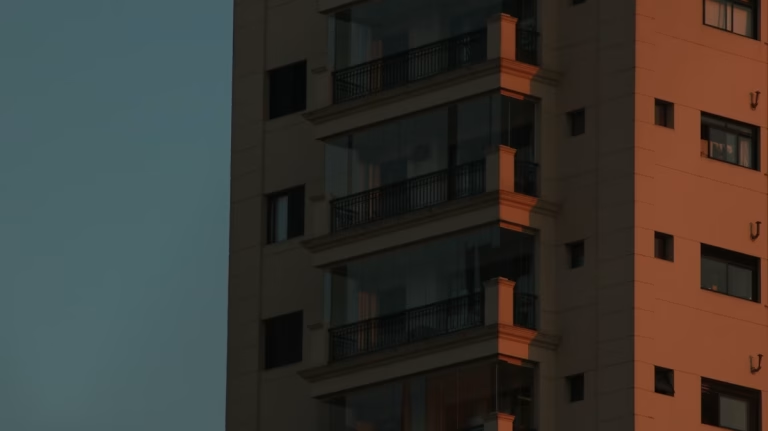
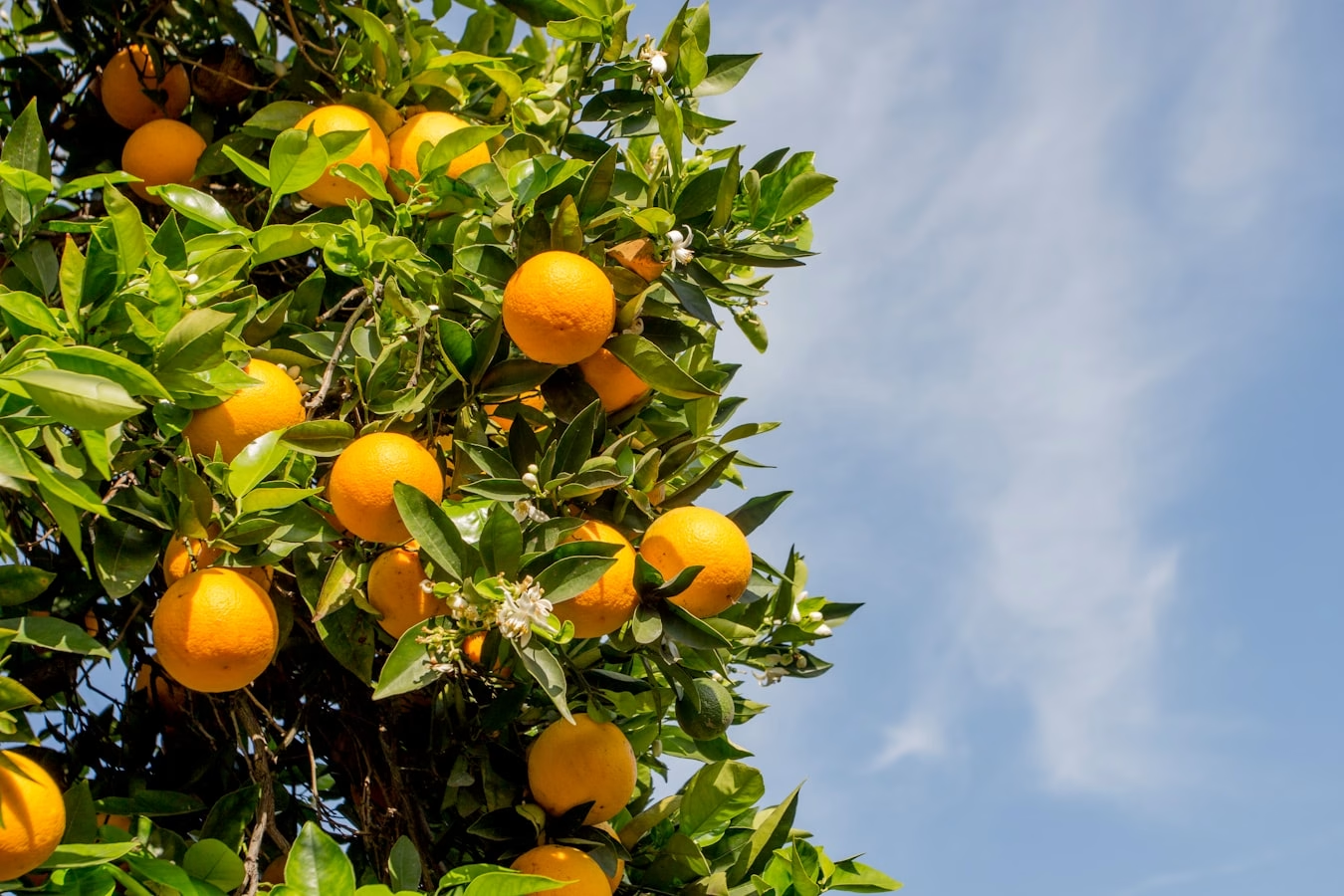
Regente’s headquarters sits on Rua Lauro Linhares, in Trindade — a neighborhood of Florianópolis. Today the area is apartment towers, a university, and traffic. There was a time, not so long ago, when 600,000 oranges were sold there at a single festival. Trindade was an orange grove, and almost no one remembers.
The Festival That Changed Its Name Without Changing Its Faith
The Festa da Laranja (Orange Festival) has a baptismal name: the Festa da Santíssima Trindade (Feast of the Holy Trinity). It is the oldest religious festival in the neighborhood, documented in writing since 1857 in the newspaper O Argos. The nickname “da Laranja” took hold around 1955, and the reason lay in the stalls.
The region’s farmers sold the last harvests of the fruit in the square in front of the church and hung bunches of oranges to decorate the bamboo stalls. In 1974, the festival brought together 600,000 oranges for an estimated crowd of 50,000 people. The orange was no ordinary decoration. It was the neighborhood’s signature.
The Sertão do Córrego Grande (the Backcountry of Córrego Grande)
Before it was the university district, Trindade was rural — an area of small farms, pastures, and cattle, known as the “Sertão do Córrego Grande.” The writer Virgílio Várzea, in a 1900 work, already described the festival taking place “beneath the boughs of the orange trees or the coffee groves around” the little church. The orange grove is no legend: it sits on the page of a chronicler from more than a hundred years ago.
The neighborhood once had another name: “Trás do Morro” (Behind the Hill). It lay behind the Morro da Cruz relative to Desterro — the old name of Florianópolis — on the same road that linked the city center to Lagoa da Conceição. It became a parish in 1853.
Where UFSC Stands Today, Cattle Once Lowed
The turning point came in 1960, with the founding of UFSC (the Federal University of Santa Catarina). The university campus was built on the former Fazenda Modelo Assis Brasil, a government dairy farm, in a rural valley of Trindade. Where thousands of students now come and go, cattle once lowed.
The neighborhood went vertical afterward. The first apartment building dates to 1978, and the real estate boom took off from the 1980s on. Little by little, the orange groves gave way to towers. A parish archivist summed up what remained: by the 1990s, the orange survived only in the festival’s name.
Why This Matters Today
Regente has been in Trindade for decades, on Rua Lauro Linhares. Every day, people come and go from the neighborhood without imagining they are walking where an orchard once stood. The festival still takes place, every year, and it is one of the last bridges to that era.
To know Florianópolis from the inside is to know this: that today’s sea of buildings grew over an orange grove, and that the name of a festival can be the last memory of an entire neighborhood.
Frequently Asked Questions
What is the Festa da Laranja in Florianópolis?
It is the popular name for the Festa da Santíssima Trindade (Feast of the Holy Trinity), the oldest religious festival in the Trindade neighborhood, documented since 1857. The nickname “da Laranja” (of the Orange) appeared around 1955, when the neighborhood produced oranges in abundance and the fruit decorated the festival stalls.
Why did Trindade have orange groves?
Before becoming a university district, Trindade was a rural Azorean area of small farms and orchards, known as the “Sertão do Córrego Grande.” Oranges were grown in abundance there and in the surrounding areas, as Virgílio Várzea recorded as early as 1900.
When did Trindade stop being rural?
The transformation began with the founding of UFSC in 1960, built on the former Fazenda Modelo Assis Brasil. High-rise development came later, with the first building in 1978 and the real estate boom from the 1980s on.
Memória da Ilha (Island Memory), a Regente series about the Florianópolis that goes unnoticed.
Sources: VOIGT, A. F. “Memória do bairro Trindade,” ÁGORA/UFSC journal (2011); ND+; NSC Total; UFSC — Caderno Expressões; Paróquia da Santíssima Trindade (Holy Trinity Parish).
Read also: the history of Florianópolis