Complete Guide to Córrego Grande Neighborhood in Florianópolis: What It’s Like to Live Here
Córrego Grande is the neighborhood that resolves an apparent contradiction: being ten minutes on foot from UFSC without having to live in the university hustle of Trindade. It’s tree-lined, quiet, has a linear park of more than 17,000 m² that won international awards, and access to the Itacorubi technology corridor — all in a neighborhood that still isn’t as well-known as it should be.
The average price per m² is above R$ 12,000 — higher than Trindade itself — and the profile of who lives here reflects that: middle-to-upper-income families, UFSC professors and staff, technology professionals. It’s not the neighborhood of the undergraduate student looking for a cheap room. It’s the neighborhood of someone who grew up near the university and decided they still want that proximity — with better quality of life.
This guide brings together what you need to know to assess whether Córrego Grande is the right place for you to live, buy, or invest.
Where Córrego Grande Is Located and Why Location Matters
Córrego Grande occupies the central-south portion of Florianópolis island, between the neighborhoods of Trindade (to the north/northwest), Pantanal (to the east), Santa Mônica (to the east), and Itacorubi (to the north/northeast). The neighborhood borders directly with the UFSC campus — part of the University Rectory facilities are officially within Córrego Grande’s limits.
Practical distances:
– UFSC (main campus): ~1 km (parts of the neighborhood are 10–15 minutes on foot)
– Florianópolis Downtown: ~8 km
– Conceição Lagoon: ~6 km
– Joaquina Beach: ~12 km
– Hercílio Luz Airport: ~20 km
Córrego Grande’s location has a characteristic that few Florianópolis neighborhoods replicate: it is simultaneously close to the university, the technology axis of Itacorubi (ACATE, CIASC), and beaches on the island’s east side. It’s a central position on the mobility map — not in the historic downtown, but at a node that connects well.
The Neighborhood’s History: From Azorean Mills to an Award-Winning Park
The name “Córrego Grande” is literal: the neighborhood was named after the waterways that run through it, a legacy from the colonial period when families of Azorean descent from the 18th century established their properties in this part of the island. Flour mills, small farms, and minor properties characterized the settlement until the mid-20th century.
Urban transformation came in the 1970s and 1980s, driven by two factors: the consolidation of UFSC at the Trindade campus (founded in 1960) and the growth of the technology axis of Itacorubi, with the arrival of CIASC and, later, ACATE. The neighborhood urbanized with the same profile as its demand generators: families connected to the university and the technology sector.
The most visible result of this history is the Córrego Grande Linear Park, opened in 2014 along the waterway that gave the neighborhood its name. The project, developed by JA8 Arquitetura Viva, was published in ArchDaily and demonstrates something rare in Florianópolis’s urbanization: a project of international quality within a residential neighborhood.
The Linear Park: The Differentiator That Doesn’t Exist in Any Other Central Neighborhood
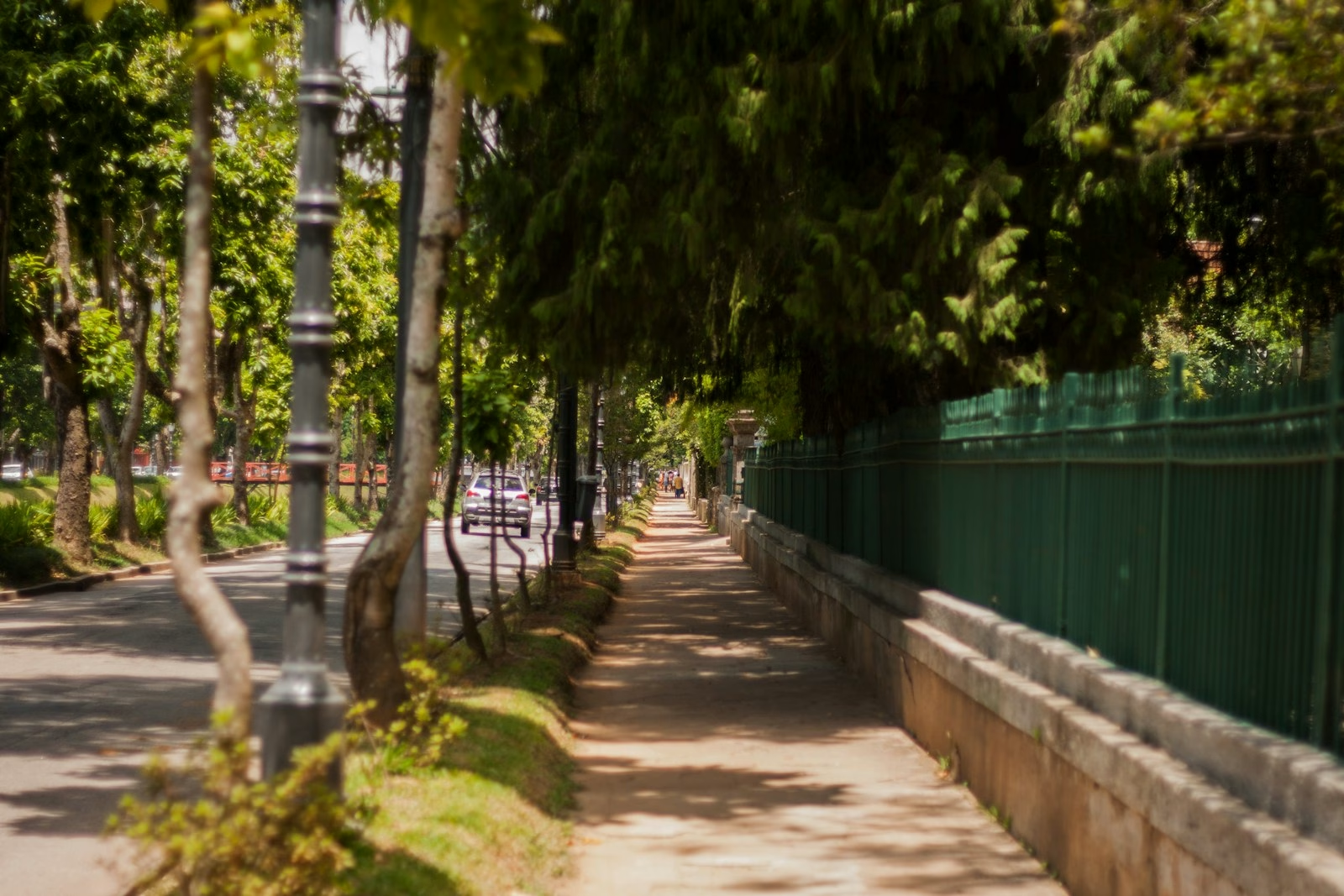
More than 17,000 m² of green space along the stream, between Rua João Pio Duarte Silva and the Itacorubi mangrove. Córrego Grande Linear Park is not just the neighborhood’s green area — it’s an ecological corridor connecting two municipal natural parks: the Maciço da Costeira Municipal Natural Park and the Itacorubi Mangrove Municipal Natural Park.
What’s in the Park
- Walking and cycling paths
- Wooden decks and walkways over the stream
- Benches and viewpoints integrated into the landscape
- Native Atlantic Forest vegetation: garapuvu, pau-brasil, palmiteiro, ipê
- Urban biodiversity: butterflies, birds, and small mammals frequent the park
The project was also designed to serve urban drainage — the soil’s permeability along the park reduces flooding and improves the stream’s water quality. Opened in 2014 (Municipal Law 9.455/2014), the park completed 10 years in 2024. (Source: ND+)
For residents of Córrego Grande, the park is the everyday walking space — not a special destination that requires travel. It’s what Beira-Mar Norte is for residents of Agronômica: the leisure axis accessible from your front door.
Infrastructure: What the Neighborhood Delivers Daily
Health
The neighborhood has its own UBS (Basic Health Unit). For medium and high complexity care, the University Hospital (HU/UFSC) is about 1 km away, in Trindade — a SUS reference with specialist care. HIJG and Hospital Nereu Ramos, in Agronômica, are ~3–4 km away.
Education
UFSC, 1 km away, is the great educational differentiator of the area. The main campus houses the Application School (state reference public school), the library, the university restaurant, and an ecosystem of courses and activities accessible to the community. Municipal and state schools and Early Childhood Education Centers (CEI) are in the neighborhood. UDESC, another university campus, is ~2 km away, in Itacorubi.
Commerce and Services
Córrego Grande has proximity commerce. Avenida Lauro Linhares, the main commercial axis of Trindade, is ~1 km away — ensuring access to supermarkets, pharmacies, bakeries, restaurants, and services without needing to go downtown. Neighboring Santa Mônica complements the service offerings.
Mobility: How the Neighborhood Connects
On foot to UFSC: Parts of the neighborhood are 10–15 minutes on foot from the main campus. For professors, staff, and graduate students, this eliminates daily commuting.
Public transit: Bus lines connect the neighborhood to the Central Terminal (TICEN) and Trindade. Frequency is functional for those needing downtown or other parts of the city.
BRT (expected 2026): Florianópolis’s BRT corridor includes a 5.2 km stretch connecting Trindade Terminal (TICEN) to Saco dos Limões Terminal, passing through UFSC. The route improves regional connectivity for Córrego Grande residents using public transit. (Source: FloripAmanhã)
Car: Easy access to SC-401, with less internal traffic than Trindade or the downtown axis. The neighborhood is ~8 km from downtown — 15–25 minutes without rush hour.
Córrego Grande vs. Trindade: Why the More Expensive Neighborhood Is Next to the University Neighborhood
The most common question from those considering living near UFSC is: why does Córrego Grande have a higher price per m² than Trindade if both are close to the university?
The answer is in the profile: Trindade is the university neighborhood in the strict sense — high volume of commerce aimed at students, intense movement on Avenida Lauro Linhares, active nightlife bars and restaurants. Córrego Grande preserved its residential character. Web research describes the profile precisely: “those with a larger budget who value infrastructure above university bustle.”
This is reflected in price — Córrego Grande’s m² is above R$ 12,000, higher than Trindade (R$ 11,978/m²). And it’s reflected in the tenant profile: Córrego Grande attracts graduate students, researchers, and professionals — not the typical undergraduate student seeking a low-cost individual room.
Who Lives in Córrego Grande
- Families: Value tranquility, tree cover, proximity to UFSC without the university hustle
- UFSC Professors and Staff: Prefer the neighborhood to Trindade for being quieter and more residential
- Technology Professionals: Connected to the ACATE, CIASC axis and Sapiens Park in Itacorubi
- Investors: Buy to rent to graduate students and professionals with stable demand
- Modern Condominiums: 2025–2028 launches attract middle-to-upper-income profiles with condominium infrastructure expectations (bike parking, coworking, fitness)
What Córrego Grande Doesn’t Have
Beaches on foot: Conceição Lagoon is ~6 km away and open-ocean beaches are ~12 km away. For daily beach access, Córrego Grande requires travel — like most central Florianópolis neighborhoods.
Nightlife: The neighborhood is quiet at night. Those seeking active bars and restaurants go to Trindade (1 km) or downtown (8 km).
Dense commerce within the neighborhood: The neighborhood’s commercial axis is more contained. Trindade and Santa Mônica complement what’s missing within Córrego Grande.
Low-cost properties: With m² above R$ 12,000, properties below R$ 600,000 are rare — and concentrated in smaller property types. The neighborhood is not an option for those seeking a low entry price.
Frequently Asked Questions About Living in Córrego Grande
Is Córrego Grande safe?
Safety perception is positive among residents. The neighborhood is residential, less busy than Trindade, and with gated communities in a good portion of the inventory. There’s no concentration of nighttime commerce or clustering points that are sources of insecurity.
Is the Linear Park safe?
The park has lighting and is frequented by residents during daytime and early evening hours. Like any urban park, safety decreases in late hours. For walks and exercise until late afternoon, the park is safe and well-frequented.
Is it worth buying in a new condominium in Córrego Grande?
The 2025–2028 launches have modern condominium standards (bike parking, coworking, gym, gourmet area) and off-plan pricing with discounts over ready inventory. Proximity to the Linear Park is a relevant appreciation argument — properties around the park have greater liquidity.
What’s the nearest bus stop to UFSC?
The neighborhood has direct connection with UFSC via municipal lines. For parts of the neighborhood 10–15 minutes on foot from the campus, walking or cycling is more efficient than waiting for a bus.
Complete Guide Series: Córrego Grande
Regente in Córrego Grande
Regente has 58 active properties in Córrego Grande — from 2-bedroom apartments near the Linear Park to penthouses with views of Maciço da Costeira. With a track record of real transactions in the neighborhood, our team knows what portals don’t show: the price that was actually paid and the average negotiation time.
If you’re evaluating living, buying, or selling in Córrego Grande, talk to a Regente specialist.
[Search for Properties in Córrego Grande] ← internal link: /pesquisar-imovel/venda/imoveis/florianopolis/corrego-grande/
Sources: AgoraFloripa (history, location); Wikipedia (colonial origin); Brognoli (UFSC in the neighborhood); ND+ (Linear Park 10 years, 2024); Urbita (ecological corridor); ArchDaily (JA8 Arquitetura Viva) (resident profile, UFSC distance); FloripAmanhã (BRT 2025), profile 2025).