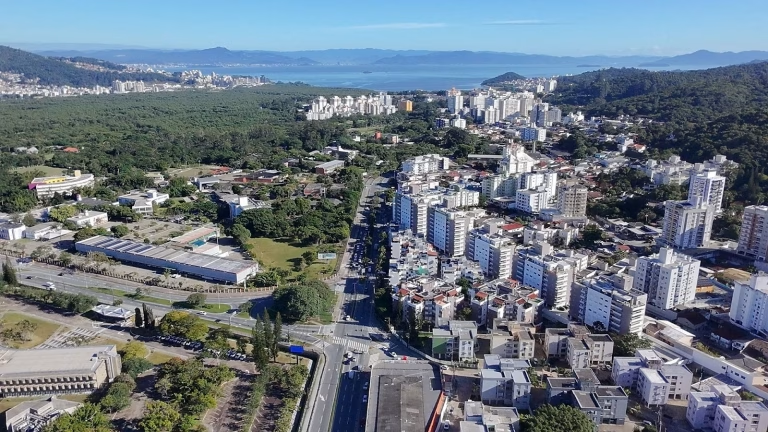

Florianópolis appears on several lists of best cities for digital nomads. But generic lists of “best city for remote work” tend to be vague.
This guide gets concrete: what the city actually has, how much it costs to live well, which neighborhood makes the most sense — and a question few ask clearly: is it worth having a base here, or is it better to keep cycling through rentals?
Why Florianópolis Attracts Nomads
The Right Size
Florianópolis has about 550,000 residents. It’s large enough to have complete urban infrastructure — a reference hospital, an airport with direct flights to major hubs, gastronomic variety, cultural life — and small enough not to have the chaos of São Paulo, Rio, or Recife.
For someone who works remotely and can choose where to live, size matters. A city too large creates problems (traffic, noise, insecurity) that drain energy that could go into work. A city too small lacks options — of people, services, stimulation.
Connectivity
Florianópolis has internet infrastructure above Brazil’s average. Fiber optic reaches virtually all central neighborhoods, with plans of 400Mbps to 1Gbps available. For those doing international video calls, daily standups, or uploading large files, this is not a detail.
The main coworkings in Downtown and neighborhoods like Trindade, Itacorubi, and Córrego Grande offer redundant connections and power backups. There’s no universal guarantee — but the average connectivity level is reliable for professional work.
The Tech Hub
Florianópolis has one of Brazil’s densest technology ecosystems outside the São Paulo-Rio axis. Companies like Involves, Conta Azul, Hotmart (regional office), Hortifrutti Digital, and hundreds of startups have headquarters or significant operations in the city. This creates a critical mass of technology, design, and product professionals — meaning: community, events, networking, and a local job market as an option if the remote model changes.
For the nomad who wants to belong to a professional ecosystem while maintaining location freedom, that density makes a difference.
Quality Urban Life Downtown
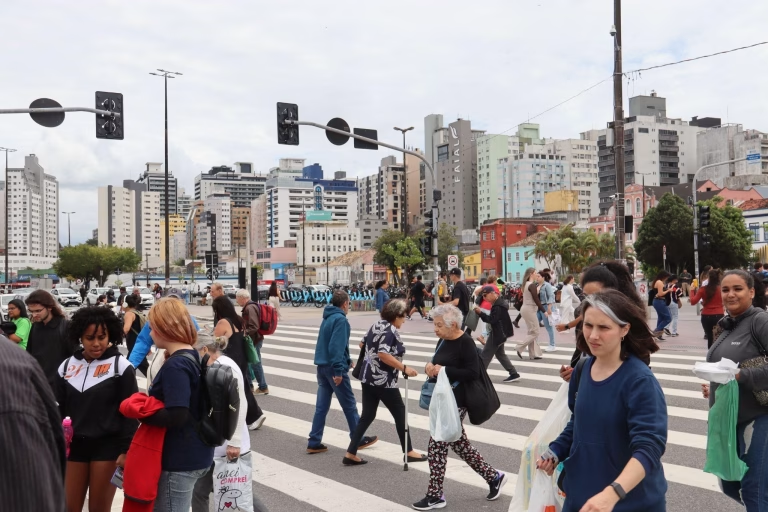
Downtown Florianópolis has undergone progressive revitalization in recent years — Esteves Júnior with Jan Gehl Architects design, Marina Park in development on the waterfront, Hercílio Luz Bridge restored, Felipe Schmidt reformed. The result is an increasingly walkable central area with greater density of services and qualified public life.
For the nomad who wants to live well without a car, Downtown Florianópolis in 2026 is different from Downtown in 2018.
What Florianópolis Offers Concretely
Coworkings
Florianópolis’s coworking ecosystem has grown significantly with the adoption of remote work. Relevant options Downtown and surrounding areas:
- Independent coworkings Downtown, in Trindade and Itacorubi — monthly plans from R$ 400 to R$ 1,200 with private office
- Cafés with work infrastructure — especially around UFSC and in the historic downtown
- Coworking integrated into residential buildings — the model that buildings like Parkside adopt, with coworking within the condominium
For those who don’t want to pay for separate coworking, the second option — residential building with its own coworking — eliminates the cost and commute.
Airport
Hercílio Luz International Airport operates direct flights to São Paulo (GRU and CGH), Rio de Janeiro, Brasília, Curitiba, Porto Alegre, and seasonal international destinations. For the nomad who “goes back to clients” periodically or has family in another city, the frequency and coverage are sufficient for most itineraries.
Community
Florianópolis has active groups of remote professionals, developers, designers, and digital entrepreneurs. Regular meetups in technology, an active startup scene with frequent events, and a culture of collaboration from the university ecosystem (UFSC, UDESC) create social context that many smaller cities don’t have.
How Much Does It Cost to Live Well in Florianópolis as a Nomad
Costs vary widely depending on neighborhood and lifestyle. A reference for 2026:
Housing (rent):
– Studio Downtown: R$ 2,500 to R$ 4,000/month (furnished)
– Studio in Jurerê or Lagoa: R$ 3,000 to R$ 6,000/month
– One-bedroom apartment Downtown: R$ 3,500 to R$ 5,500/month
Food:
– Eating out (lunch + dinner at good restaurants): R$ 2,500 to R$ 4,000/month
– Cooking at home + occasional delivery: R$ 1,200 to R$ 2,000/month
Transportation:
– No car (Downtown, bike + Uber): R$ 300 to R$ 600/month
– With own car: R$ 1,500 to R$ 3,000/month (fixed + variable)
External coworking: R$ 400 to R$ 1,200/month (if not included in building)
Estimated total for an established nomad, without car, living Downtown: R$ 6,000 to R$ 9,000/month. For those earning in foreign currency, that cost is significantly lower in purchasing power terms.
Own a Base or Live on Rotating Rentals?
That’s the question that divides nomads. And the answer has changed in recent years.
The rotating rental argument: maximum flexibility. When a place doesn’t work, move. No long-term commitment. Money not tied up can be invested in variable returns.
The own base argument: after years of nomadism, most people discover they prefer having a fixed point to return to — where things are in their place, where they don’t need to readjust. The exhaustion of “being in transit” is real. Plus, a property sitting idle when you’re away can generate income.
The model most widely adopted by nomads building patrimony: own base + managed rental for months away. The property stays rented when you’re not there — reduces carrying costs and keeps the asset productive.
For that model to work, the property needs to be:
1. In a location with high rental demand
2. 100% furnished and equipped
3. With third-party management that operates without owner presence
Those three requirements eliminate most available properties in Florianópolis — and define exactly what the Parkside model delivers.
Neighborhoods for the Digital Nomad in Florianópolis
Downtown: best urban/convenience ratio. Everything walkable. No car. Revitalization underway. Shortest distance to airport (15-20 min). Less contact with nature/beach.
Trindade: near UFSC, startup ecosystem, cafés with work atmosphere. Quieter than Downtown but still urban. Good bike lane to Downtown.
Itacorubi: tech hub, offices of large companies, more business-oriented. Good infrastructure but less nightlife.
Lagoa da Conceição: beach life, consolidated nomad community, good cost-benefit for seasonal rentals. Far from airport (40-50 min).
Jurerê Internacional: luxury, excellent beaches, international community. Expensive, far from airport, completely car-dependent.
For the nomad who wants urban quality and car independence: Downtown or Trindade. For those prioritizing nature and beach lifestyle: Lagoa. For those with family needing good schools: Córrego Grande, João Paulo, Agronômica.
Frequently Asked Questions
Do I need a visa to stay in Florianópolis as a foreign nomad?
There’s no specific “digital nomad” visa in Brazil yet — unlike Portugal, Thailand, or Mexico. Tourists from many countries can stay up to 90 days without a visa. For longer stays, options include investor visa, family reunification visa, or student visa. The regulatory situation changes — consult the Brazilian embassy in your country of origin.
Is the internet really reliable for remote work?
For central neighborhoods (Downtown, Trindade, Itacorubi, Córrego Grande), yes. In more distant neighborhoods and some beaches, quality varies. I recommend having a 5G data plan as backup — Claro and Vivo coverage is reasonable across the island.
Is Florianópolis dangerous for foreigners?
It’s one of Brazil’s safest state capitals, with indicators well below São Paulo, Rio, or Salvador. Basic precautions that apply to any city — especially in the historic downtown at night.
Is it worth buying property in Florianópolis as a nomad?
It depends on your timeline. If you plan to use Florianópolis as a base for the next 5+ years and have capital or financing ability, the math usually works out — especially if the property generates income when you’re away. The managed rental model eliminates the remote management problem.
Want a Base in Florianópolis Without Giving Up Freedom?
Parkside Rio Branco was designed for exactly this profile: a compact property, 100% furnished, in Downtown Florianópolis, with rental management by the developer itself for when you’re away.
The launch happens at a closed event on May 28th. Pre-registration guarantees priority access to the pricing table and available typologies.