Moving to Florianópolis: The Honest Guide for Anyone Thinking About Relocating
Florianópolis sells well. The image of beaches, nature, safety, and quality of life has circulated through WhatsApp groups of professionals from São Paulo and Rio de Janeiro for at least ten years. And it is not a lie — there is a lot of truth in that narrative.
But there is an important difference between the marketing version and the lived version. This guide exists to bridge that gap.
If you are thinking about moving to Florianópolis, you will find here real data, honest limitations, and a curation by profile that will help you decide — not dream.
The Promise and the Reality
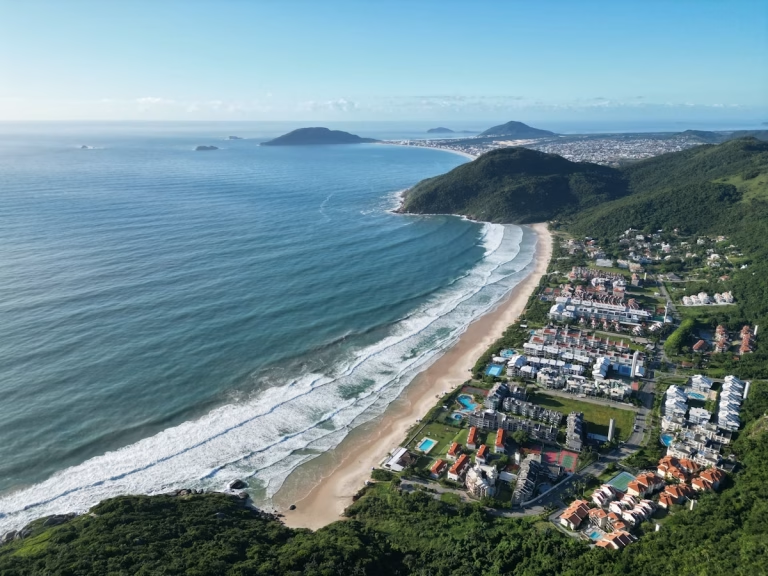
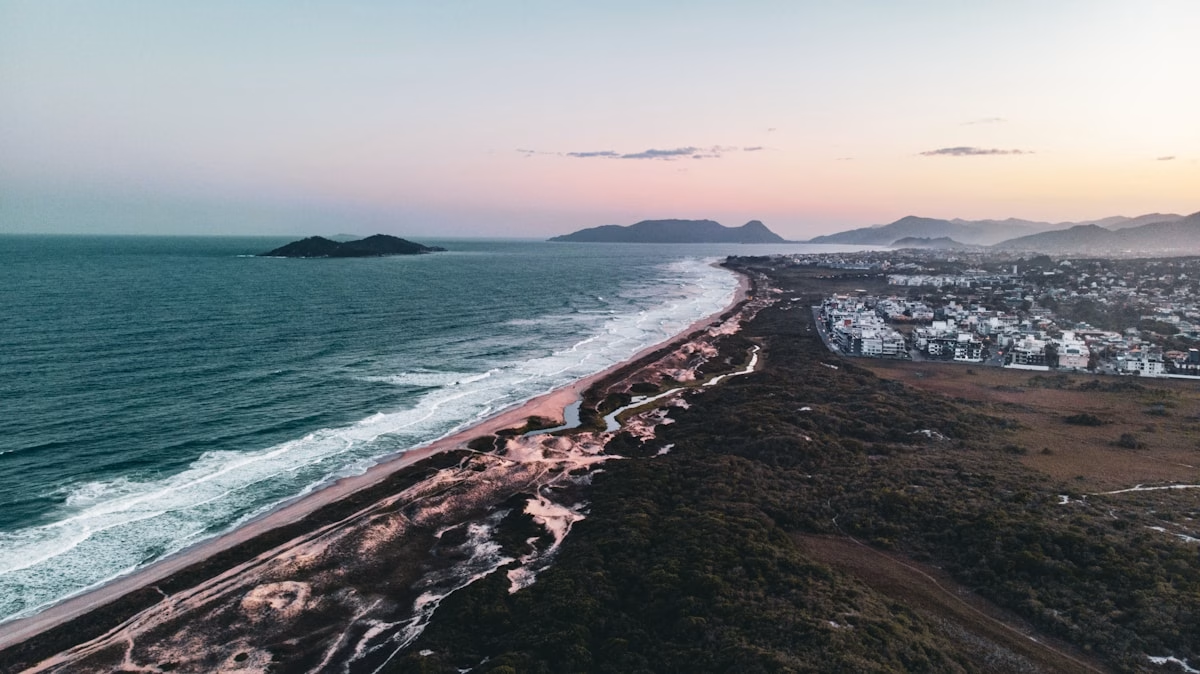
The promise is real in several aspects: Florianópolis has 42 beaches, trails, lakes, traffic that — outside peak hours — is tolerable, and a sense of human-scale city that São Paulo will never be able to replicate.
The reality has layers that tourist guides ignore:
Cost of living is high. According to Expatistan (April/2026), a person needs R$8,272/month to live comfortably in Florianópolis. A family of four, R$16,652/month. The local basic basket is the third most expensive in Brazil, according to DIEESE, and the bus fare — R$6.20 by Cartão Cidadão — is the most expensive among Brazilian capitals.
Traffic has genuinely bad hours. It is not the permanent chaos of São Paulo, but the road infrastructure of an island with a single central exit creates predictable and irritating congestion, especially on SC-401 (northbound) and on the bridges connecting to the mainland.
The job market is smaller. Anyone coming from São Paulo with a consolidated career in large corporations will feel the difference. Tech and services are in real growth, but the volume of openings in traditional careers is smaller.
That said, let us move to the numbers.
Real Cost of Living — Table by Profile
The values below are average estimates for 2026, considering neighborhoods of intermediate standard (neither Jurerê, nor Estreito). Includes rent, HOA fee, food, transportation, and basic health insurance.
| Profile | Rent + HOA | Food | Transportation | Health | Leisure | Total Estimated |
|---|---|---|---|---|---|---|
| Single, remote work | R$2,800 | R$1,200 | R$300 | R$400 | R$600 | ~R$5,300 |
| Couple without children | R$3,500 | R$2,000 | R$500 | R$700 | R$800 | ~R$7,500 |
| Family with 2 children (private school) | R$4,800 | R$3,000 | R$700 | R$1,500 | R$800 | ~R$14,000+ |
| Family with 2 children (public school) | R$4,800 | R$3,000 | R$700 | R$1,200 | R$800 | ~R$10,500 |
Sources: FipeZap Jan/2026 (average rent R$59.76/m²), Expatistan Apr/2026, DIEESE Feb/2026.
What these numbers do not include: language school, gym, children’s extracurricular activities, car (financing + insurance + IPVA + gas at R$6.47/liter), property renovations, and the invisible costs of living on an island (everything you buy in São Paulo by delivery here has shipping or a delay).
Traffic: The Elephant in the Room
Anyone comparing Florianópolis traffic to São Paulo and saying it is “much better” is making the wrong comparison. Comparing with Curitiba, Porto Alegre, or Joinville would be more fair — and then the picture changes.
Florianópolis’ problem is structural: it is an island with a single real exit to the mainland (the Colombo Salles and Pedro Ivo Campos bridges) and a fishbone-style road system — streets branch off a central road and there is no alternative when that road clogs.
The most critical points in 2026:
- SC-401 (northbound, to Jurerê/Canasvieiras): daily congestion between 7:30–9:00 a.m. and 5:30–7:30 p.m. Road expansion works in progress, with completion forecast in 2026 — but the bidding for the new overpasses failed and the timeline is uncertain.
- Mainland access bridges: rush hour morning and afternoon. Anyone living on the mainland (Coqueiros, Estreito, Capoeiras) feels it more.
- Lagoa da Conceição → Center: passage through Beira-Mar Norte is the bottleneck. There is no alternative road.
- High season (December–February): daily traffic turns to chaos on roads near beaches.
What changes with planned works: the BRT (exclusive bus lane) between Trindade and Center should start implementation still in 2026. SC-406 (Itacorubi) is in the planning phase for tripling. These are relevant measures — but nothing that solves the island’s structural problem in the medium term.
Honest conclusion: if you live in a neighborhood close to work and avoid peak hours, traffic is tolerable. If you need to cross the island daily, you will suffer.
Neighborhoods by Lifestyle
Florianópolis has more than 80 neighborhoods. Most people need to choose considering three variables: how much you can spend, which neighborhood profile fits your routine, and the distance to work (or to internet connection, in the case of digital nomads).
For families with children:
- Campeche — preserved beach, neighborhood in expansion, private schools in the radius, average rent R$3,300/month for an apartment. More peaceful, but far from center.
- João Paulo — upscale neighborhood in the northern part of the island, close to the north and with good infrastructure. Rent higher (R$4,000–R$6,000).
- Coqueiros — on the mainland, not on the island. Good infrastructure, more affordable rent (R$2,000–R$3,000), good schools. Anyone who does not need to cross the bridge daily feels the traffic less.
- Santa Mônica / Córrego Grande — central, close to UFSC, good access, private and public schools. Intermediate price.
For digital nomads and remote workers:
- Lagoa da Conceição — incredible views, cosmopolitan community, coworking spaces, but terrible traffic for anyone who needs to go to center regularly.
- Trindade / Córrego Grande — close to the university, good internet, coworking spaces, intermediate price, good access.
- Agronômica / Center — maximum centrality, lesser lifestyle appeal but maximum practicality.
For young couples without children:
- Itacorubi — growing in infrastructure, gastronomic options, reasonable access to center.
- Agronômica — quiet, well-located, rent below average for proximity to center.
- Lagoa da Conceição — if budget allows and work is 100% remote.
What SP Has That FLN Will Never Have (Honesty Builds Trust)
This section exists because people who move without knowing what they lose tend to be more disappointed than those who do the math clearly.
Diversified job market. Florianópolis has a real tech ecosystem (6,100 companies, 38,000 jobs in the sector, 25% of local GDP), but outside technology and services, formal employment opportunities are much smaller than in São Paulo. If your career depends on large corporations, banks, heavy industry, or the financial market, São Paulo will continue to be superior.
Variety of culture and entertainment. São Paulo has international shows every week, relevant museums, an inexhaustible dining scene, and neighborhoods that are destinations in their own right. Florianópolis has good quality of life, but the cultural agenda is more limited. Anyone who depends on dense urban entertainment suffers.
Full urban convenience. One-hour marketplace delivery, high-complexity medical specialists in any sub-specialty, niche services, art fairs, well-stocked bookstores — in São Paulo it all exists. In Florianópolis, much arrives later, costs more, or simply does not exist yet.
Professional connections at scale. In-person business meetings, corporate events, high-density networking — all of this is still São Paulo. Florianópolis is growing, but will not match this in the short term.
When Florianópolis Makes Sense — and When It Does Not
It makes sense if:
- You work remotely with income from São Paulo (or international)
- Your family prioritizes space, nature, and a less accelerated routine
- You are in technology or entrepreneurship and want to be in a growing ecosystem
- You value free time and lifestyle more than linear career growth
- You can afford the cost of living without financial stress (rule: do not try to save in Florianópolis what you spend in São Paulo — the cost is similar for equivalent standards)
It does not make sense if:
- You depend on formal employment in a sector FLN has not yet developed
- Your current income level does not cover R$6,000–R$8,000/month per adult without tightening
- You will live in the south of the island and work in the north (or vice versa) without a car
- You depend on dense urban entertainment for your mental health
- You have children with complex health needs requiring high-volume specialists
Frequently Asked Questions
Is it worth it to live in Florianópolis?
It depends on your profile and what you call “worth it”. For anyone with compatible income, who works remotely, and values quality of life above career opportunities, Florianópolis is a defensible and satisfying choice. For anyone who depends on a conventional job market or needs full urban convenience, the answer tends to be no.
How much do I need to earn to live well in Florianópolis?
For a single person with average standard: R$6,000–R$7,000/month. For a couple without children: R$8,000–R$10,000. For a family with two children in private school: R$14,000–R$18,000. These values include housing, food, transportation, health insurance, and basic leisure, but not a car or extracurricular activities.
Is Florianópolis traffic worse than São Paulo’s?
In absolute volume, no. In relative worsening of local quality of life, sometimes yes. São Paulo has terrible traffic but metro infrastructure and Uber that minimize the impact. Florianópolis does not have metro and buses are slow. If you depend on a car to cross the island during peak hours, the impact on your routine is real.
What is the cheapest neighborhood to live in Florianópolis?
On the mainland: Capoeiras, Estreito, and nearby areas have the lowest rents (R$1,200–R$2,000). On the island: Saco dos Limões, Rio Vermelho, and part of Ingleses have more affordable options (R$1,800–R$2,500). The cheapest with reasonable infrastructure tends to be Coqueiros (mainland).
Is Florianópolis more expensive than São Paulo?
For rent, not necessarily — São Paulo tends to be more expensive in equivalent regions. But when you include food, basic basket (3rd most expensive in Brazil), and public transportation (most expensive among capitals), Florianópolis’ total cost of living approaches or exceeds São Paulo’s for the same living standard.
What is it like to live in Florianópolis in winter?
Catarinense winter surprises anyone coming from the Southeast. Temperatures can drop below 10°C, with cold and humid south wind. The months of June to August have a lot of rain and cold days that contrast with the tropical island image. The city does not have central heating in older apartments — this is a real adaptation point.
Does Florianópolis have good schools?
Yes. The best private schools (Colégio Energia, COC/SEB, Colégio do Campeche, Educandário Imaculada Conceição) have good ENEM performance. The municipal public network has variable quality by neighborhood. Access to the best private schools depends on getting a spot — demand is high and many have waiting lists.
Can I move to Florianópolis without a guaranteed job?
If you have six months of expenses saved, work remotely, or are in the technology sector, yes — the local tech job market is in real growth. For other careers, the recommendation is to secure income before moving.