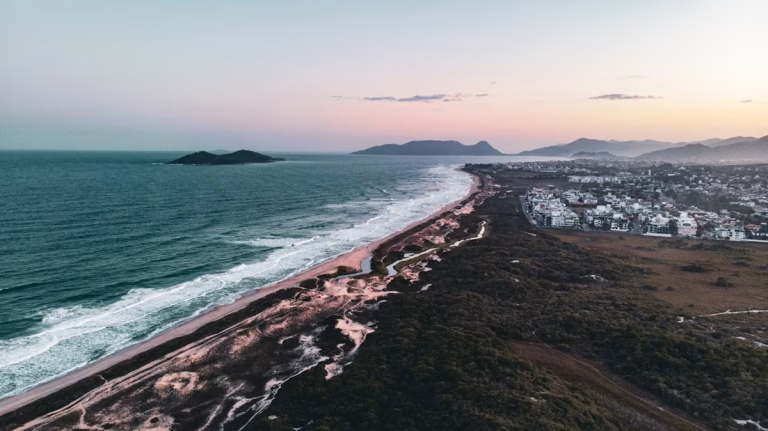
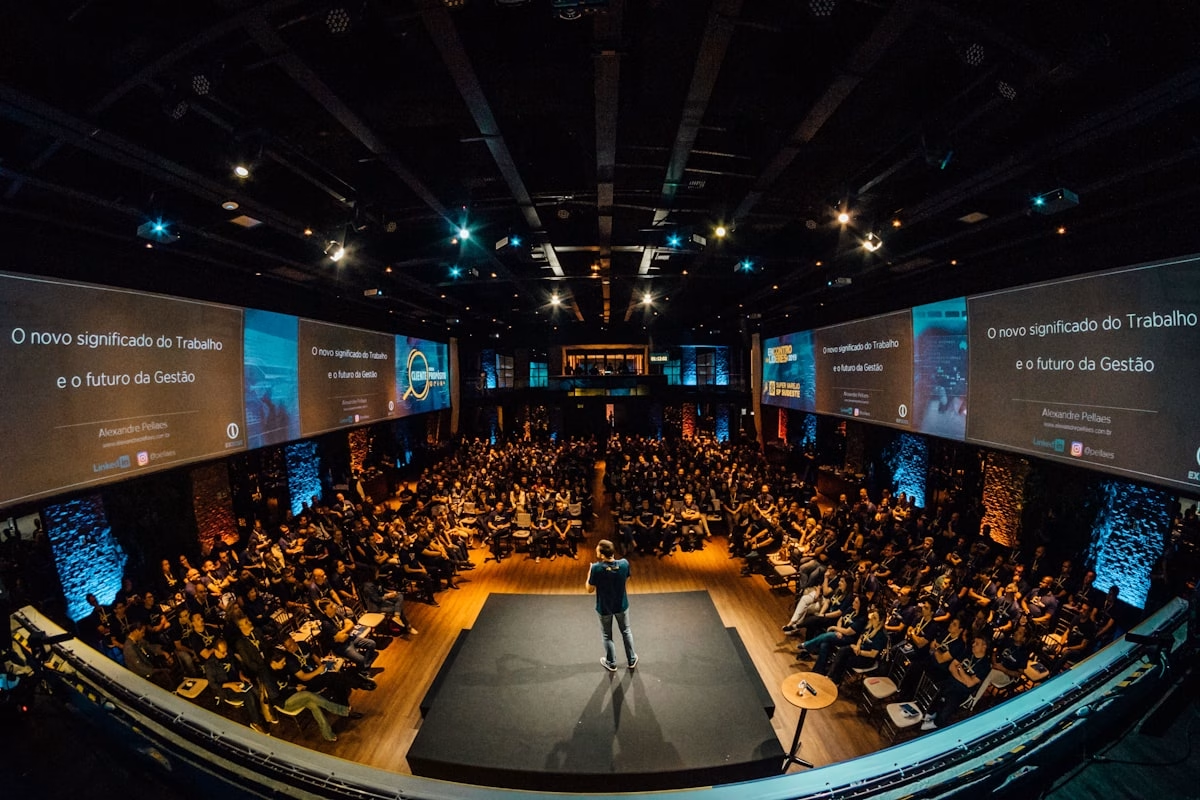
When the subject is tourism in Florianópolis, almost everything you read talks about beaches, vacation itineraries and the best time to visit. There is a profile of visitor that few city tour guides usually describe: the executive who arrives for a congress, the developer who comes for a technology event, the construction professional who spends a few days on the island working. Florianópolis is also, increasingly, a business city.
An economy that no longer depends only on summer
The nickname “Island of Magic” still evokes the seasonality of the beach, but the city’s economic base has changed. The technology sector accounts for approximately 25% of the local economy, placing Florianópolis in a position of national leadership among state capitals on this indicator Source (2026). It is this weight of the tech sector that explains why major corporate events, such as the DWX and the Startup Summit, choose the city as their headquarters.
The movement follows a national trend. Corporate tourism in Brazil hit a record between January and May 2026, with R$ 6.06 billion in volume, 10% above the same period in 2025 Source (2026). Worth confirming this number with the source before reusing it in another piece: it is data with short validity, subject to revision in upcoming Embratur reports.
The effect also appears in international flow. Santa Catarina received 565,000 foreign tourists in 2025, surpassing the total from the previous year, a 66% increase Source (2026). This data also has an expiration date. Worth checking if the number holds up in future sector bulletins before repeating it in future content.
The central role of CentroSul
No conversation about business tourism in Florianópolis goes far without CentroSul. The Florianópolis Convention Center was built in 1999 and has since become the main stage for major city events. Embratur selected it as the best convention center in Brazil, recognition that helps explain why national event organizers look to Floripa as a natural destination Source.
The infrastructure backs this title: the main auditorium holds 2,560 seats, complemented by nine additional rooms for simultaneous events. This size is what allows CentroSul to host the Construsummit, considered the largest management and technology event in the construction industry in the country, with approximately three thousand business opportunities generated in a single edition Source.
CentroSul’s calendar is not limited to construction. Encatho & Exprotel, an event focused on the hospitality and tourism sector, reaches its 36th edition in 2026, a sign that the convention center functions as a meeting point for distinct sectors, not just technology Source.
Why they call Florianópolis the Silicon Island
The reference to “Silicon Island” comes directly from the concentration of technology companies in the city and the weight of this sector in the local economy, the same 25% of municipal GDP already cited. This ecosystem sustains ACATE (Santa Catarina Association of Technology Companies), today one of the most relevant industry associations in the tech sector in Brazil, bringing together companies, startups and innovation initiatives based in Greater Florianópolis.
Relevant universities, skilled workforce and the island’s quality of life created an environment that attracts technology companies and, with them, business tourism linked to this sector. Professionals who come to the city for meetings, training or events in the tech ecosystem form a flow of visitors with very different needs from the beach tourist: accommodation close to the downtown or coworking hubs, compact schedules and connectivity as priority.
An ecosystem that attracts even before the event happens
A congress at CentroSul lasts just a few days, but the business cycle it sets in motion starts long before and continues after. Companies participating in Construsummit or events linked to ACATE usually conduct market reconnaissance, preliminary visits and meetings that extend beyond the event’s official date. This pattern is common in cities that function as convention hubs: the event itself is just the visible tip of a much larger flow of visitors.
The CentroSul infrastructure, with nine simultaneous rooms in addition to the main auditorium, allows multiple events of different sizes to happen in the same time window. This means the city’s business calendar does not depend on a single major fair per year. There is overlap of audiences, which sustains lodging, gastronomy and services associated with corporate tourism in a more constant way than an isolated seasonal peak.
The weight of technology in the urban landscape
Calling Florianópolis the Silicon Island is not just a marketing nickname. When a single sector accounts for a quarter of a city’s economy, that shows up in the urban landscape: coworkings, software company headquarters, tech community events and a population of professionals who move between in-person meetings and remote work. This profile of visitor and resident seeks stable connectivity, proximity to work hubs and a city that functions outside of season, requirements very different from those of the summer tourist.
ACATE plays a central role in this ecosystem as an entity that brings together companies and startups in the sector, functioning as a reference point for anyone arriving in the city for work and needing to quickly understand the local technology map. Events like the DWX and the Startup Summit do not arise from nowhere: they are expressions of an already-established community, sustained by this type of network.
What still needs to be measured
This business tourism segment has a clear gap: there are no specific hotel occupancy data segmented by corporate profile available in this research. [verify] This remains an open point for a future update of this content, when there is a primary source on the topic.
What this visitor profile says about living in Florianópolis
Those who come to the city for work, participate in an event at CentroSul or get to know the ACATE ecosystem often return with a different question from the beach tourist: what would it be like to live here. The plurality of reasons that bring people to Florianópolis—business, technology, events—also helps define who later seeks a property in the city. To understand this broader picture, it’s worth knowing the other tourism profiles that shape Florianópolis today. learn more
Frequently Asked Questions
Does Florianópolis have relevant business tourism?
Yes. The city is a hub for corporate events and technology, with events such as the DWX and the Startup Summit, and hosts at CentroSul, elected by Embratur as the best convention center in Brazil, major events such as Construsummit and Encatho & Exprotel.
What is CentroSul?
It is the Florianópolis Convention Center, built in 1999. It has a main auditorium with 2,560 seats and nine additional rooms, and was elected by Embratur as the best convention center in Brazil.
Why is Florianópolis called the Silicon Island?
Because the technology sector accounts for approximately 25% of the local economy, placing the city in a position of national leadership among state capitals on this indicator. This tech ecosystem is sustained by entities such as ACATE and attracts companies, startups and sector events.
What technology and construction events happen in Florianópolis?
The DWX and the Startup Summit are references in the technology ecosystem. In construction, Construsummit is considered the largest management and technology event in the sector in the country, with approximately three thousand business opportunities generated per edition.
Is corporate tourism in Florianópolis growing?
The indicators point to this: corporate tourism in Brazil hit a record between January and May 2026, and Santa Catarina received 565,000 foreign tourists in 2025, an increase of 66% over the previous year. Worth confirming these numbers in more recent sources before reproducing them, since these are data with short validity.