Most neighborhood guides to Florianópolis answer the wrong question. “Which is the best neighborhood?” is too generic to be useful. What a family really needs to know is: which neighborhood fits my income level, the distance to my job, the schools I can afford, and the lifestyle routine I want?
This article won’t rank neighborhoods. It will help you eliminate those that don’t make sense for you and dig deeper into the ones worth your attention.
What a family really needs
Before listing neighborhoods, it’s worth naming the actual decision criteria for families with children:
School. It’s the central point. The distance between school and home defines the quality of your routine — and in Florianópolis, where traffic during school hours can gridlock any route, this matters a lot. Choosing your school before choosing your neighborhood is the right sequence.
Perceived safety. Florianópolis doesn’t have the violence rates of São Paulo or Rio, but the perception of safety varies by neighborhood. Busy streets during the day, local commerce, and public lighting are more reliable practical indicators than isolated crime statistics.
Access to healthcare. For young children, accessible UBS (Basic Health Unit) and Hospital Infantil Joana de Gusmão (state reference facility, located on the mainland in Agronômica) are points of attention. Most island neighborhoods have a UBS, but the pediatric hospital requires crossing the city in serious situations.
Space and recreation. Children need space. Parks, playgrounds, and accessible beaches count toward quality of life.
Everyday infrastructure. Nearby supermarket, pharmacy, bank, pediatrician covered by your health plan — the distance to these services defines whether your routine works.
With these criteria in mind, the curated list below makes more sense.
Campeche
Profile: Family that wants nature, beach, and a growing neighborhood — with tolerance for distance from downtown.
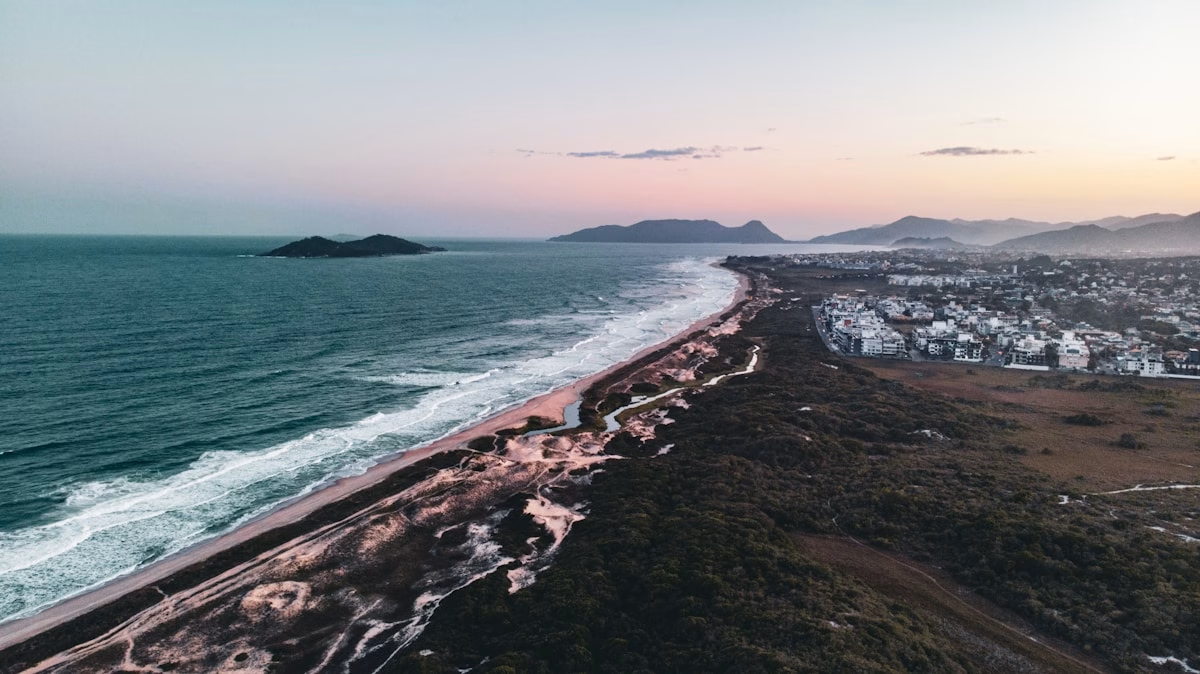
Campeche is one of the most sought-after neighborhoods by families arriving on the island who want a calmer routine. It has one of Florianópolis’s most preserved beaches, tree-lined streets, growing local commerce, and the feeling of a neighborhood that still breathes.
Schools:
- Colégio do Campeche — one of the city’s best private schools, with good ENEM scores and a long waiting list. Located in the neighborhood itself.
- Public school: there are municipal school options in the neighborhood, with variable quality. Demand is high, which strains availability.
Healthcare: Campeche’s UBS serves the region. Pediatric Hospital: 25–35 minutes in average traffic, more during school hours.
Rental: R$2,800–R$4,200 for 2–3 bedrooms. Houses with yards have high demand and proportionally higher costs.
Transportation: Few bus lines, low frequency. Car practically required for families with children. The Via Expressa Sul (SC-405) connects to downtown, but congestion happens during school hours.
Honest limitations: far from downtown and the northern regions. Anyone with relatives or friends on the north side of the island will feel the distance. Accelerated real estate expansion is changing the neighborhood’s profile — the calm character from a few years ago is being replaced by new buildings and construction noise.
Makes sense for: family with intermediate-to-high income, working from home or in the south of the island, prioritizing beach and nature in the daily routine.
João Paulo
Profile: Family with high income, wanting the best infrastructure and willing to pay for it.
João Paulo is on the north side of the island, between downtown and Jurerê. It’s a noble residential neighborhood with a strongly family-oriented character — quiet streets, well-structured condominiums with gym, pool, and 24-hour gate security.
Schools:
- Proximity to reference schools on the north side and in the Córrego Grande/UFSC region (30–40 minutes).
- Good-quality private schools nearby (Colégio Santo Agostinho, national chain branches).
Healthcare: Easy access to private clinics in the north region. UBS available. Pediatric Hospital: 25–35 minutes via SC-401, which can double in traffic.
Rental: R$3,500–R$6,500 for 2–3 bedrooms. Houses can exceed R$8,000/month.
Transportation: Bus coverage limited. Car essential. SC-401 is the main access to downtown — exactly the axis with the most congestion.
Honest limitations: high price even by Florianópolis standards. Total car dependency. Distance from the south side of the island.
Makes sense for: family with high income, working on the north side or remotely, prioritizing security and condominium infrastructure.
Ingleses
Profile: Family wanting beach on the north side, complete neighborhood infrastructure, and intermediate pricing.
Ingleses is the most populous neighborhood on the north side of the island, with complete commerce, supermarkets, schools, banking agencies, and extensive beach. It’s one of the regions that grew most in infrastructure over the past five years.
Schools:
- Colégio Nossa Senhora da Conceição — well-rated by the local community.
- Public school options in the region. Variable quality.
Healthcare: UBS of Ingleses. Private clinics in the region. Pediatric Hospital: 40–60 minutes depending on traffic on SC-401.
Rental: R$2,500–R$3,800 for 2–3 bedrooms. More accessible prices than João Paulo for similar infrastructure.
Transportation: Bus lines to downtown, but with long travel times (45–70 minutes). Car recommended for families.
Honest limitations: distance from downtown is real — 30–45 km via SC-401. For anyone working downtown or on the south side, daily commute can be draining.
Makes sense for: family working on the north side or remotely, wanting beach in their daily life and preferring a neighborhood with a city feel over an exclusively residential one.
Coqueiros (mainland)
Profile: Family prioritizing value for money, complete infrastructure, and no need to be on the island.
Coqueiros is one of Florianópolis’s best neighborhoods by a criterion nobody mentions: the relationship between infrastructure and price. Located on the mainland, it has supermarkets, shopping (CenterVille), good-quality private schools, parks, and nearby hospital — without the extra cost of living on the island.
Schools:
- Good supply of private schools in the region (Colégio Bom Jesus, among others).
- Municipal public network with reasonable quality.
Healthcare: Regional Hospital in São José nearby. UBS available. Pediatric Hospital: 15–20 minutes without traffic.
Rental: R$2,000–R$3,200 for 2–3 bedrooms. One of the best value-for-money options among the neighborhoods mentioned.
Transportation: Bus with good frequency to the island’s downtown (via bridges). For anyone working on the mainland, mobility is significantly better.
Honest limitations: no beach of its own. To enjoy island beaches, you need to cross the bridges — which can get congested on weekends. Anyone wanting beach in their daily life will feel the absence.
Makes sense for: family with a tighter budget, not needing daily beach access and working on the mainland or at the city center.
Saco dos Limões
Profile: Family wanting to live near downtown without paying a noble neighborhood price.
A quiet residential neighborhood close to the center-south of the island, with one of Florianópolis’s highest-rated UBSs. Reasonable walking or cycling access to downtown.
Schools: Fewer private school options in the neighborhood itself. Accessible to schools in the center and adjacent neighborhoods.
Healthcare: Saco dos Limões UBS with good reputation. Pediatric Hospital: 15–20 minutes.
Rental: R$1,800–R$3,000 for 2–3 bedrooms. One of the most accessible among island neighborhoods close to downtown.
Transportation: Good bus coverage. Possibility of walking downtown in 20–30 minutes.
Honest limitations: no beach of its own (Armação Beach is on the south side). Less commercial infrastructure than other neighborhoods mentioned. Part of the neighborhood has steep streets.
Makes sense for: family with intermediate income, working in the center or south of the island and wanting to live on the island without paying a high price.
The right question isn’t “which is the best neighborhood”
After reading the descriptions above, one or two options probably became clearer for your situation — and others were eliminated.
That’s the correct process. “Best neighborhood” is an abstraction that doesn’t exist. What exists is the combination of:
- Income available for housing
- Work or school location you’ve already chosen
- Lifestyle priority (beach, tranquility, proximity to downtown)
- Car use profile (have it or not, will need it or not)
A family with two young children in school at Córrego Grande will suffer living in Ingleses. A family working from home wanting beach every day won’t get the same benefit from Coqueiros.
Practical recommendation: choose the school first. The neighborhood will emerge from the acceptable distance radius around it.
Frequently Asked Questions
Which is the safest Florianópolis neighborhood for families?
Statistically, neighborhoods with lowest incident rates are João Paulo, Santa Mônica, Córrego Grande, and Coqueiros. The perception of safety in Florianópolis is, overall, better than in major capitals — but the chosen neighborhood and the specific area within it make a difference.
Which neighborhood has the best schools in Florianópolis?
The highest-rated schools on ENEM are distributed across the downtown and intermediate neighborhoods: Colégio Energia (Downtown), COC/SEB, Educandário Imaculada Conceição, and Colégio do Campeche. The highest-rated school isn’t necessarily in the most expensive neighborhood. Research the waiting list before deciding where to live.
Does Florianópolis have good hospitals for children?
Hospital Infantil Joana de Gusmão is a state reference and is in Agronômica, close to downtown. For checkups and lower-complexity urgencies, most neighborhoods have a UBS and private pediatric clinics with reasonable schedule availability.
Do I need a car to live in Florianópolis with a family?
In practice, yes — especially outside central neighborhoods. Florianópolis’s public transportation is limited in residential areas away from downtown. With young children, car dependency is even higher. Car cost needs to be factored into your planning.
Campeche or Ingleses: which is better for a family?
It depends on your work location. Campeche is better for anyone working on the south side or remotely. Ingleses is more suitable for anyone on the north — and has good local infrastructure for daily living. Campeche has a more beautiful, preserved beach; Ingleses has more commerce and convenience.
Is Coqueiros worth it even though it’s not on the island?
Yes, for many profiles. The value for money is hard to beat — complete infrastructure, good schools, nearby hospital, and rent 20%–30% lower than equivalent island neighborhoods. Anyone not dependent on daily beach access and working on the mainland or downtown will find in Coqueiros one of Florianópolis’s best options.
Is there a good neighborhood for a family in Florianópolis with a tight budget?
Yes. Saco dos Limões on the island and Coqueiros/Estreito on the mainland are the best value-for-money options. Rio Tavares and Ribeirão da Ilha on the south side also have more accessible prices, but with distance from downtown and less infrastructure.